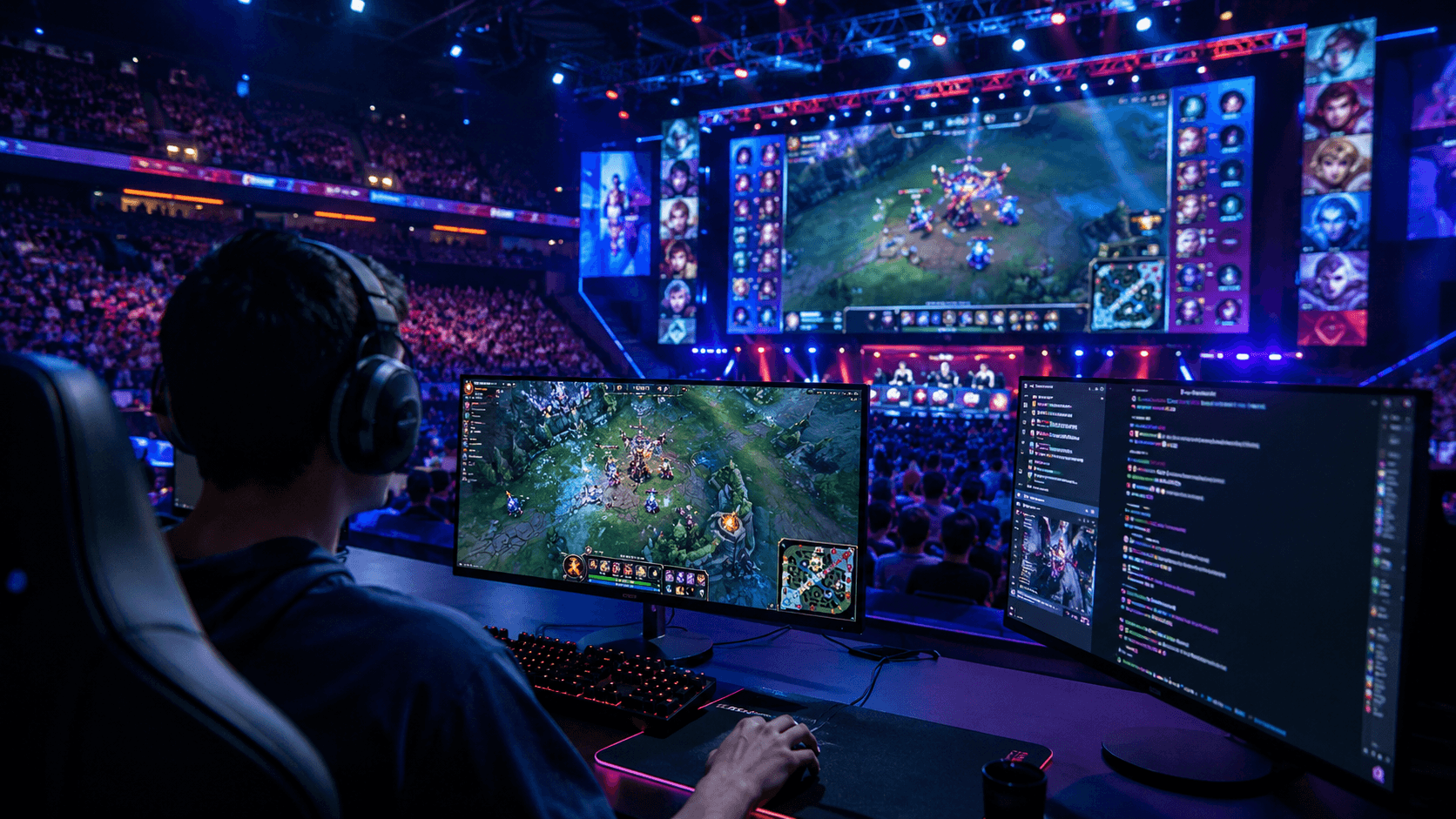
You can watch esports for free on live-streaming platforms such as Twitch and YouTube, on official league and publisher sites, and through tournament organisers like ESL FACEIT Group and BLAST. Use official sites and community databases such as Liquipedia for schedules, and check start times in your own time zone.
Key takeaways
- Twitch and YouTube carry most major esports events, often with several commentary languages.
- Official game and league sites list schedules, standings, and streams.
- Liquipedia and Esports Charts help you find brackets, results, and event data.
- Learn tournament formats and basic game goals to enjoy matches, and use official streams only.
In this guide
- The Main Places to Watch Esports
- How to Find Schedules and Results
- Understanding Tournament Formats
- How to Follow a Game You Do Not Know
- Features That Make Watching Better
- What You Need to Watch Smoothly
- Popular Esports Genres
- Staying Safe and Balanced as a Fan
- Want to Play as Well as Watch?
- Common Mistakes New Fans Make
- Frequently Asked Questions
Last updated: October 2026
Esports matches are streamed live for free, often with commentary in several languages, replays, and chat. The challenge for new fans is not finding something to watch but knowing where to look and how to follow a tournament. This guide explains the main places to watch esports online, how to find schedules, how to understand tournament formats, and how to get more from the experience.
The Main Places to Watch Esports
| Platform type | Examples | Good for |
|---|---|---|
| Live-streaming platforms | Twitch and YouTube | Most tournaments, with chat, clips, and replays |
| Official league and game sites | LoL Esports and other publisher sites | Official schedules, standings, and streams |
| Tournament organisers | ESL FACEIT Group and BLAST | Major international events across several games |
| Team and creator channels | Team streams and co-streams by popular creators | Commentary, reactions, and a more casual vibe |
| TV and sports networks | Selected events on broadcast or sports channels | Major finals and special events |
Streaming rights change, so always check the event page or official game site for the current broadcast partner.
How to Find Schedules and Results
- Official sites and social accounts of the game and the tournament organiser.
- Community databases such as Liquipedia, which lists tournaments, brackets, teams, and results for many games.
- Audience trackers such as Esports Charts, which show viewership data for events.
- Calendar reminders and app notifications from the platform you use, so you do not miss a match.
Check start times against your own time zone, because many events are scheduled in US, European, or Asian time.
Understanding Tournament Formats
| Format | How it works |
|---|---|
| Single elimination | Lose once and you are out |
| Double elimination | You must lose twice to be eliminated, which gives teams a second chance |
| Round robin or group stage | Teams play each other in a group, and the best advance |
| Swiss system | Teams with similar records are matched against each other over several rounds |
| Best-of series | A match is decided over several games, such as best of three or best of five |
Knowing the format helps you understand why a certain match matters.
How to Follow a Game You Do Not Know
- Start with a beginner-friendly stream. Many broadcasts include explainers, and some have a dedicated beginner commentary.
- Learn the basic goal of the game. A short tutorial video or the game wiki is enough to start.
- Follow one or two teams or players. Having someone to support makes matches more exciting.
- Use the chat and replays to ask questions and review key moments.
- Watch with friends. Watch parties and community servers make it social.
Features That Make Watching Better
- Multiple languages and co-streams: many events offer different commentary options.
- Video on demand (VODs): replays let you catch up on matches you missed.
- Rewards or drops: some events give in-game items for watching, but rules vary by event and platform.
- Captions and accessibility: some streams provide captions. If you create your own content, our guide to the benefits of video captions explains why they matter.
- Chat tools: filter spam and toxic messages to enjoy the stream.
What You Need to Watch Smoothly
- A reliable internet connection. Streams in high quality need a stable bandwidth.
- A modern phone, tablet, smart TV, or computer. If you are choosing a device, see our guide to how to choose a laptop.
- Headphones for clear commentary and in-game sound.
- Data awareness if you use mobile data, because streaming uses a lot.
Popular Esports Genres
| Genre | What you watch |
|---|---|
| MOBA | Five-player teams battling for objectives and bases |
| First-person shooter | Tactical team rounds with aim and strategy |
| Battle royale | Many players or squads competing to be the last standing |
| Fighting games | One-on-one duels that reward reflexes and adaptation |
| Sports and racing games | Familiar sports and motorsport in virtual form |
Staying Safe and Balanced as a Fan
- Use official links and avoid unofficial streams that may contain malware or scams.
- Be cautious about sharing personal information in chat.
- Betting and skin-trading sites linked to esports carry real risks and age limits. Avoid them if you are under age, and treat any gambling as entertainment with strict limits.
- Take breaks, and keep watching healthy. Late-night matches can affect sleep.
Want to Play as Well as Watch?
If watching inspires you to compete, read our beginner guide on how to get into esports, which covers practice, teams, tournaments, and staying healthy.
Common Mistakes New Fans Make
- Not checking time zones. You may miss the match.
- Using unofficial streams. They can be low quality or unsafe.
- Jumping into complex games with no background. Learn the basics first.
- Believing every rumour. Check official announcements.
- Ignoring chat rules. Respect other viewers and moderators.
Frequently Asked Questions
Most major tournaments stream free on Twitch and YouTube, and official game or league sites list the streams.
Check official league and organiser sites, community databases such as Liquipedia, and platform notifications. Always convert times to your time zone.
A match decided by the first team to win two games, with a third game played only if needed.
Some major events are shown on TV or sports networks, but most coverage is online. Check the event page for current broadcast partners.
Choose a game you find easy to understand or already play, and pick a beginner-friendly broadcast with clear commentary.
Often not. They can be poor quality or contain malware, so stick to official streams and channels.
This article is general information. Broadcast rights and platforms change, so check official event pages for current options.
Related Guides
- How to Create AI Art: Beginner Guide to AI Art Generators (2026) – How to create AI art step by step: choose a tool, write strong prompts, refine results, and check copyright…
- How to Choose an RC Brushless Motor and ESC: Beginner Guide (2026) – RC brushless motor guide: KV rating, size, sensored vs sensorless, ESC amp ratings, battery cells, gearing,…
- History of Google: From BackRub to the AI Era (Key Dates and Updates) – History of Google: from the 1996 BackRub project to Gmail, Android, Alphabet, and AI. Key dates, search upd…
- What Is a Shell Company? Meaning, Uses, Risks, and Red Flags – What is a shell company? Learn the meaning, legitimate uses, money laundering risks, red flags, and how ban…