

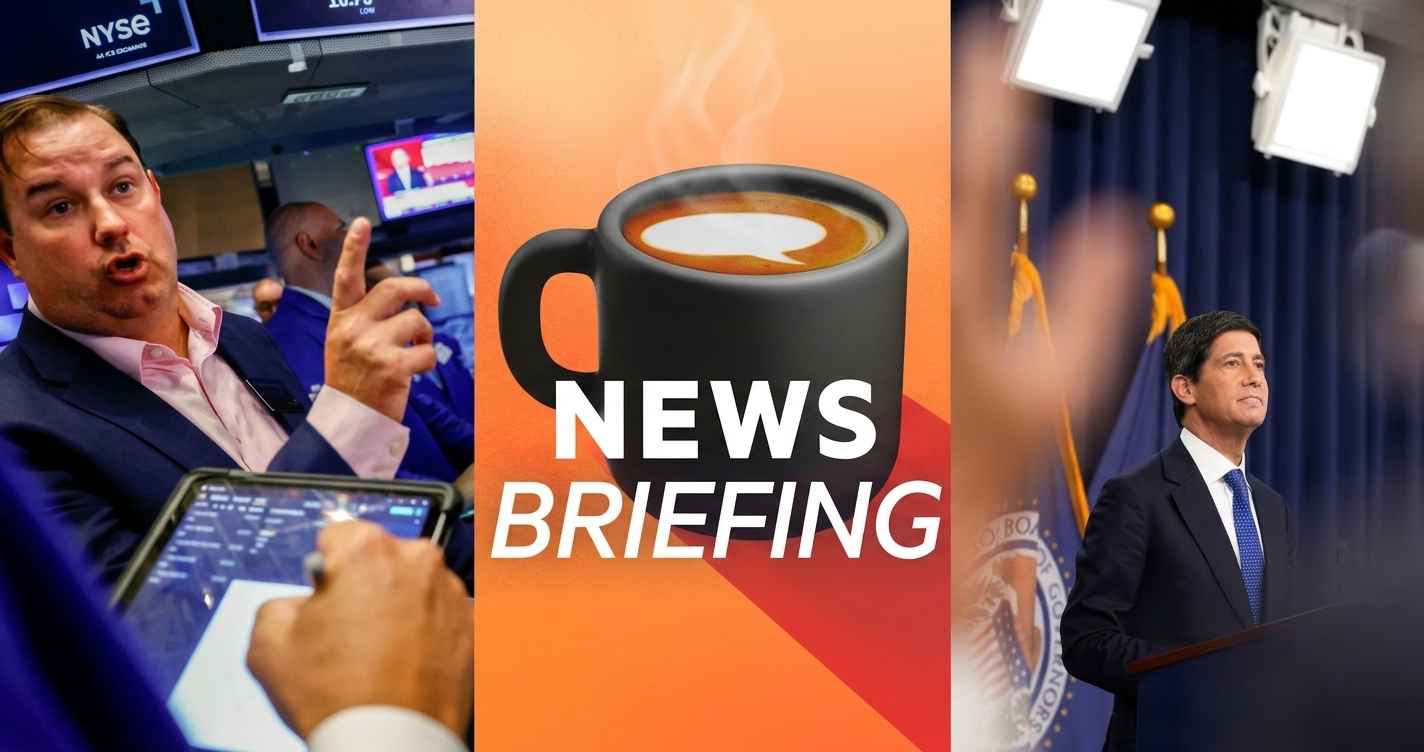
When Federal Reserve Chair Kevin Warsh voted to raise interest rates on September 16, 2026, he did something few expected from the man President Donald Trump handpicked specifically to bring borrowing costs down: he defied the president who appointed him. The unanimous 12-0 decision to hike rates to 3.75%-4% marked the culmination of months of escalating tension between the White House and the central bank — a standoff that says as much about the limits of presidential pressure on the Fed as it does about the current state of the U.S. economy.
This is the story of how that tension built, week by week, and what it means for the Federal Reserve’s independence going forward — a story that stretches from Warsh’s swearing-in ceremony in May, through a summer of mounting inflation data and dissenting votes, to a September showdown that put the chairman’s independence to its first real, and very public, test.
A Chairman Chosen to Cut Rates
Kevin Warsh was sworn in as Federal Reserve Chair on May 22, 2026, succeeding Jerome Powell, whom Trump had repeatedly and publicly criticized throughout his term for keeping interest rates too high. Warsh’s appointment was widely understood in Washington and on Wall Street as a deliberate choice: reporting at the time indicated Trump had made clear that Warsh would not have gotten the job had he favored rate hikes. The nomination was, in effect, a bet that Warsh’s instincts aligned with the administration’s preference for cheaper borrowing costs.
For the first few months of his term, that bet appeared to pay off. The Fed held rates steady at its June meeting, and Trump — notably more restrained toward Warsh than he had ever been toward Powell — offered lukewarm approval, telling reporters at the time that a hike seemed unlikely and that he was “guided by what” his new chairman wanted.
The Cracks Begin to Show: July’s Dissent
The first sign that Warsh’s path might not run as smoothly as the White House hoped came at the Fed’s July 29 meeting. The FOMC voted to hold rates steady, but three regional Federal Reserve Bank presidents — Beth Hammack of Cleveland, Neel Kashkari of Minneapolis, and Lorie Logan of Dallas — dissented, arguing for an immediate rate increase. It was the first time in nearly a decade that three FOMC members had broken ranks with a unified hawkish stance, a signal that patience within the committee for holding rates steady was wearing thin.
That fractured vote set the stage for what would become an increasingly public tug-of-war over the following six weeks.
Jackson Hole: Warsh Signals a Shift
At the Federal Reserve’s annual Jackson Hole economic symposium in late August, Warsh gave his clearest indication yet that a rate hike might be coming. He told the gathered economists and policymakers that the central bank still had “work to do” on inflation if underlying price pressures weren’t moving convincingly toward the Fed’s 2% target. It was a carefully hedged statement, consistent with Warsh’s stated preference for a “minimalist communication” style that avoids committing the Fed to a specific path — but markets read it as a hawkish signal, and rate-hike expectations began climbing from that point forward.
The Pressure Campaign Intensifies
As expectations for a September hike grew, so did the intensity of the administration’s public campaign against it. In the two weeks leading up to the Fed’s September 15-16 meeting, an unusually broad cast of administration officials weighed in:
- Vice President JD Vance said publicly that the administration believed “the Fed should be lowering interest rates,” adding that the White House was “doing a lot of things” to keep rates down but “it would be nice to have some help from the Federal Reserve.”
- Treasury Secretary Scott Bessent, in a CNBC interview, argued that the Fed typically doesn’t raise rates during a supply shock until inflation effects ripple into second- or third-order impacts — an argument for patience rather than a hike.
- President Trump himself escalated from general complaints to specific threats, at one point threatening to halt trade with countries running trade surpluses with the U.S. as part of a broader effort to keep rates down. He also referred to the FOMC’s voting members as “clowns,” even while notably avoiding direct criticism of Warsh personally — a contrast with how he had treated Powell.
On Truth Social, Trump wrote that “the Fed Board, with its great new leader, must get smart — BE PATRIOTS for a change,” a message that captured his strategy throughout this period: praising Warsh personally while attacking the broader committee as an obstacle to the rate cuts he wanted.
An Ironic Twist: Trump’s Own Policies Fueled the Hike
Economic analysts pointed to an uncomfortable irony in the standoff: many of the same policies driving Trump’s frustration with the Fed were also major contributors to the inflation pressures forcing the Fed’s hand. The ongoing Iran war, which began in early 2026, pushed oil prices toward $100 a barrel and rippled through transportation and manufacturing costs. Tariff policy added further upward pressure on a range of consumer goods. As one CNBC analysis put it in the days before the September decision, a direct line could be drawn from the administration’s own policies to the rate increase markets were bracing for — a hike likely to be led by the very chairman Trump had personally selected.
The Phone Calls Revelation
Adding another layer of complexity to the standoff, reports surfaced in mid-September confirming that Trump and Warsh had spoken by phone multiple times since Warsh took over as chair — an unusual degree of direct contact between a sitting president and a Fed chair, given the institution’s traditional insulation from day-to-day political influence. The revelation came just before Warsh’s first press conference as chair following a rate decision, adding extra scrutiny to how he would address questions about his relationship with the president who appointed him.
When reporters asked Warsh directly about his conversations with Trump during the post-meeting press conference, he declined to discuss the substance of any calls, instead emphasizing the Fed’s institutional independence and stating plainly, “I’m not in the forward guidance business” — a line that doubled as both a policy stance and a deflection from the political question being asked.
The Lisa Cook Situation
The Trump-Warsh dynamic hasn’t unfolded in isolation. It has coincided with a renewed administration effort to remove Fed Governor Lisa Cook, the Fed’s first Black female governor, from her seat on the Board of Governors. Former Fed Vice Chair Donald Kohn, who served on the board with Warsh during his earlier stint as governor from 2006 to 2010, has expressed doubt that Warsh will weigh in on the effort to replace Cook — a sign of how carefully the new chair has tried to stay above the broader political battles swirling around the institution, even as those battles complicate his own position.
Taken together, the pressure campaign around interest rates and the effort to reshape the Board of Governors have combined to raise fresh questions about the Fed’s independence during Warsh’s early tenure — echoing, in some ways, the pressures that defined Powell’s final years in the role, even as Trump has so far avoided the kind of direct personal attacks he once leveled at his predecessor.
September 16: The Hike, and Trump’s Reaction
When the Fed announced its 25 basis point rate increase on September 16, raising the federal funds target range to 3.75%-4%, it represented a direct rebuke of the administration’s public demands — delivered by a unanimous 12-0 vote that included the chairman Trump himself had appointed.
Trump’s response came within hours. He told reporters he still had “confidence” in Warsh, but immediately followed that with a demand that the Fed cut rates to 1% “or less” — a target far below anything the Fed’s own economic projections suggest is remotely realistic given current inflation dynamics. He also offered an unusually candid, if muddled, explanation for why Warsh had voted for the hike anyway: “I’m relying on Kevin, but he’s got, you know, a very tough board, he’s got a board that was put there by other people. And I told, I talked to Kevin, and I said, ‘You might as well vote with the board. It’s not going to matter.'”
Trump went further, describing the broader FOMC as “very hostile” and “very political,” and said they were “doing the wrong thing” — remarks that, taken together, appeared to undercut both his and Warsh’s earlier public assurances that the Fed operates independently of White House influence.
Why Warsh Broke From Trump’s Preference
Economists and Fed-watchers have offered a few overlapping explanations for why Warsh ultimately sided with the data over the president who appointed him.
First, there was the credibility factor. After his hawkish-leaning remarks at Jackson Hole, some analysts argued Warsh had effectively narrowed his own room to maneuver — going ahead with a hold in September after signaling openness to a hike would have raised uncomfortable questions about his consistency and independence right out of the gate. Peterson Institute for International Economics President Adam Posen captured this dynamic before the meeting, noting that Warsh had essentially “set himself up” in a position where skipping a hike would invite scrutiny.
Second, there was the data itself. Inflation readings through the summer showed persistent price pressure well above the Fed’s target, driven substantially by the same tariff and oil-price dynamics tied to the administration’s own policies. A Fed chair ignoring that data to satisfy a political preference would have represented a far more direct threat to the institution’s credibility than a single rate decision that displeased the president.
Third, the labor market gave Warsh room to act. With unemployment projections actually improving slightly — the Fed’s updated forecast lowered its unemployment estimate to 4.1% — policymakers had more confidence that the economy could absorb higher rates without a sharp downturn, reducing the political and economic risk of moving ahead with the hike.
What This Means for Fed Independence
The September episode offers an early test case for how much institutional independence survives when a president appoints a chair specifically to follow his preferred policy, only to have that chair diverge once in office. In some ways, Warsh’s willingness to vote for a hike despite direct pressure — including, by his own account and Trump’s, personal phone conversations on the subject — is a point in favor of the Fed’s structural independence holding up, at least on this specific decision.
At the same time, the broader pattern is harder to read as reassuring. The pressure campaign involved not just the president but the vice president, the Treasury secretary, and a public effort to remove a sitting Fed governor — a level of coordinated political pressure that goes well beyond the kind of general commentary presidents have historically directed at the central bank. Whether Warsh can continue to resist that pressure on future decisions, particularly if the Fed’s own dot plot projections hold and a second hike arrives before year-end, remains an open question that will likely define much of his early tenure.
How This Compares to the Powell Era
Trump’s relationship with Warsh so far stands in notable contrast to his relationship with predecessor Jerome Powell, whom Trump publicly and repeatedly attacked by name throughout his tenure, including calling for his removal on multiple occasions. With Warsh, Trump has largely directed his criticism at the broader FOMC — the “clowns,” the “very hostile,” “very political” board — while continuing to express personal confidence in the chairman himself.
Whether that distinction reflects genuine personal loyalty, a recognition that Warsh remains more aligned with the administration’s broader goals than Powell ever was, or simply a more careful political strategy after the criticism Trump faced for his treatment of Powell, is a matter of ongoing debate among Fed-watchers. What’s clear is that the underlying substance of the disagreement — a president wanting dramatically lower rates against a central bank citing inflation data to justify higher ones — has remained remarkably consistent across both chairs.
Market and Economist Reactions
The financial and economics commentary in the run-up to and aftermath of the decision reflected a mix of relief that the Fed had maintained its independence and concern about how sustainable that independence really is. Markets had largely priced in the hike beforehand — CME FedWatch data showed traders assigning roughly a 58-60% probability to a hike in the days before the meeting, rising further as the decision approached — which limited any acute market shock once the announcement came.
Still, longer-term borrowing costs had already been climbing in anticipation, with the 10-year Treasury yield rising above 5% for the first time since 2007 in the days before the decision — a sign that markets were, in effect, doing some of the Fed’s tightening work independently of the committee’s own actions.
What Comes Next
The Fed’s own Summary of Economic Projections, released alongside the September decision, suggests the central bank may not be done raising rates this year. The dot plot points to a potential second quarter-point hike before the end of 2026, which would push the federal funds rate to around 4.1%. If that materializes, it would set up another round of the same dynamic that defined September: a Fed chair weighing incoming inflation and employment data against continued political pressure from the administration that appointed him.
For now, Warsh has signaled he intends to keep the Fed’s communication deliberately vague on future moves, repeating that he is “not in the forward guidance business.” That approach may spare him from making promises he can’t keep to either the markets or the White House — but it also means the Trump-Warsh standoff over interest rates is unlikely to be fully resolved anytime soon.
Who Is Kevin Warsh? A Brief Background
Kevin Warsh is not a newcomer to the Federal Reserve. He previously served as a Fed governor from 2006 to 2010, a tenure that included the early stages of the 2008 financial crisis, before leaving to pursue a career that included time at the Hoover Institution and as a visiting fellow at Stanford. His return to the Fed as chairman in May 2026 marked a notable second act, and his prior institutional experience — including relationships with figures like former Vice Chair Donald Kohn, who served alongside him during his first stint — has shaped how closely his current tenure is being watched by veteran Fed observers for signs of continuity or change from his earlier record.
Warsh has long been associated with a more hawkish, rules-based approach to monetary policy than some of his predecessors, making his September 2026 vote to raise rates arguably more consistent with his broader career instincts than the “dovish pick” narrative that surrounded his nomination might have suggested.
A Brief History of Presidents vs. the Fed
Tension between the White House and the Federal Reserve is not new, even if the current standoff has its own distinct character. Some of the most notable historical episodes include:
- Nixon and Arthur Burns (early 1970s): President Richard Nixon is widely reported to have pressured Fed Chair Arthur Burns to keep monetary policy loose ahead of the 1972 election, a decision many economists later blamed for contributing to the runaway inflation of the mid-to-late 1970s.
- Reagan and Paul Volcker (early 1980s): Volcker’s aggressive rate hikes to break inflation caused a painful recession, and while the Reagan administration reportedly expressed private frustration, it largely avoided public attacks on the Fed’s independence.
- Trump and Jerome Powell (2018-2025): Trump’s first extended clash with the Fed, marked by repeated public criticism, calls for Powell’s removal, and consistent demands for rate cuts throughout Powell’s tenure.
- Trump and Kevin Warsh (2026-present): A new chapter in the same broader story, distinguished by Trump’s more targeted approach — pressuring the institution and the broader committee while largely sparing his own appointee from direct personal criticism.
What sets the current episode apart from most of these historical precedents is the sheer breadth of the pressure campaign — involving not just the president but the vice president, Treasury secretary, and a parallel effort targeting a sitting Fed governor — combined with the unusual transparency around direct phone contact between the president and the sitting chair.
Why Fed Independence Matters
The Federal Reserve’s independence from short-term political control is generally considered one of the central pillars of U.S. economic credibility. The underlying logic is straightforward: elected officials face strong incentives to favor lower interest rates and looser monetary policy, particularly ahead of elections, even when tighter policy is what the economic data calls for for the sake of long-term price stability. A central bank insulated from those short-term political incentives is, in theory, better positioned to make decisions based on economic data rather than electoral calendars.
Economists across the political spectrum have generally pointed to this independence as a key reason the U.S. has avoided the kind of runaway, politically driven inflation that has periodically destabilized other economies where central banks answer more directly to elected leadership. That’s part of why episodes like the Trump-Warsh standoff attract such close attention from markets and economists alike — not just for what they mean for interest rates in the moment, but for what they signal about the durability of that independence over time.
A Timeline of the Trump-Warsh Standoff
- May 22, 2026: Kevin Warsh is sworn in as Federal Reserve Chair, succeeding Jerome Powell.
- June 2026: The Fed holds rates steady; Trump offers muted approval, saying he’s “guided by what” Warsh wants.
- July 29, 2026: The FOMC holds again, but three regional presidents dissent in favor of an immediate hike — the first such three-way hawkish dissent in nearly a decade.
- Late August 2026: At Jackson Hole, Warsh signals the Fed still has “work to do” on inflation, raising rate-hike expectations.
- Early September 2026: Trump posts on Truth Social urging the Fed to “get smart” and “BE PATRIOTS,” while threatening to halt trade with surplus countries to pressure the Fed indirectly.
- September 5-14, 2026: Vice President Vance, Treasury Secretary Bessent, and Trump himself escalate public calls for lower rates in the days before the meeting; reports confirm multiple Trump-Warsh phone calls since May.
- September 15-16, 2026: The FOMC meets and votes 12-0 to raise rates to 3.75%-4%, defying the administration’s public demands.
- September 16, 2026 (afternoon): Trump responds, expressing continued “confidence” in Warsh while demanding rates fall to 1% or lower and describing the broader Fed board as “hostile” and “political.”
Key Terms Explained
- Fed independence: The principle that the Federal Reserve’s monetary policy decisions should be insulated from direct political control by the White House or Congress, allowing decisions to be based on economic data rather than electoral considerations.
- FOMC (Federal Open Market Committee): The Fed’s twelve-member policy-setting body, which includes the Board of Governors and a rotating group of regional Federal Reserve Bank presidents.
- Dissent (in a Fed vote): When one or more FOMC members formally vote against the majority decision, a relatively rare occurrence that signals meaningful disagreement within the committee.
- Forward guidance: Public communication from the Fed about its likely future policy path, intended to help markets anticipate central bank decisions. Warsh has deliberately minimized this practice during his tenure.
- Dot plot: The Fed’s quarterly chart showing each FOMC member’s individual projection for where interest rates should be at future dates.
Frequently Asked Questions
Did Trump appoint Kevin Warsh to cut interest rates?
Reporting at the time of his nomination indicated Trump made clear Warsh would not have been selected had he favored rate hikes, framing the appointment around an expectation of lower rates.
Did Kevin Warsh vote against Trump’s wishes?
Yes. On September 16, 2026, Warsh joined a unanimous 12-0 FOMC vote to raise interest rates, despite Trump’s public and repeated calls for the Fed to cut rates or hold them steady.
What did Trump say after the September rate hike?
Trump said he still had confidence in Warsh but demanded the Fed cut rates to 1% or lower, and described the broader FOMC board as “very hostile” and “very political.”
Did Trump and Warsh speak by phone about interest rates?
Reports confirmed Trump and Warsh spoke by phone multiple times since Warsh became chair in May 2026, though Warsh has declined to discuss the substance of those conversations publicly.
How is Warsh’s relationship with Trump different from Powell’s?
Trump has largely avoided direct personal criticism of Warsh, instead directing his frustration at the broader Federal Open Market Committee — a contrast to his years of direct, public attacks on former Chair Jerome Powell.
Will the Fed raise rates again in 2026?
The Fed’s September dot plot suggests one more possible quarter-point hike before year-end, which would bring the federal funds rate to around 4.1%, though this is a projection rather than a commitment.
What is the Federal Reserve’s relationship with the White House supposed to be?
The Federal Reserve is designed to operate independently of short-term political pressure, with its policy decisions guided by its dual mandate of stable prices and maximum employment rather than by presidential preference — a structure intended to prevent monetary policy from being used for short-term political gain.
Has a Fed chair ever defied the president who appointed them before?
Yes — it has happened at multiple points in Fed history, including instances where chairs appointed by one administration have made decisions that administration publicly disagreed with. It reflects the structural independence built into the Fed chair’s role, which includes a fixed term not directly tied to presidential approval.
Can the president remove a Federal Reserve chair over policy disagreements?
The Fed chair’s removal is a legally contested question, and courts have generally been skeptical of removals based purely on policy disagreements rather than cause. The ongoing effort to remove Fed Governor Lisa Cook is being watched closely as a potential test case for these legal boundaries.
What Economists Are Watching Next
Beyond the immediate question of whether the Fed hikes again before year-end, economists and Fed-watchers are tracking several related threads that could shape how this standoff evolves. Chief among them is whether the administration’s rhetoric shifts from pressuring the broader FOMC to targeting Warsh personally, a shift that would mark a meaningful escalation similar to what unfolded during the Powell years. Also under close watch: how the legal fight over Governor Lisa Cook’s removal proceeds, and whether it sets any precedent that could be applied — directly or indirectly — to pressure on the chair’s own position down the line.
Market participants, meanwhile, are focused on more immediate signals: incoming inflation data ahead of the Fed’s final two meetings of 2026, and whether Warsh’s deliberately vague communication style leaves room for surprises in either direction. Given how closely the September decision was watched, the run-up to the Fed’s next meeting is likely to generate a similar level of public attention — and, if recent history is any guide, a similar level of pressure from the White House.
The Bottom Line
Kevin Warsh’s decision to vote for a rate hike in September 2026, despite direct and sustained pressure from the president who appointed him specifically to lower rates, is a significant moment for the Federal Reserve’s institutional independence — even as the broader pattern of pressure, including phone calls, public threats, and an effort to remove a sitting Fed governor, raises real questions about how durable that independence will prove to be over the rest of Warsh’s term. With at least one more rate decision likely before the end of 2026, this standoff between the White House and the central bank is far from over. How Warsh navigates the next few months — balancing the data in front of him against the political pressure surrounding him — will go a long way toward defining not just his own legacy as Fed chair, but the broader question of whether the Federal Reserve’s independence can hold up under sustained political pressure in the years ahead.