

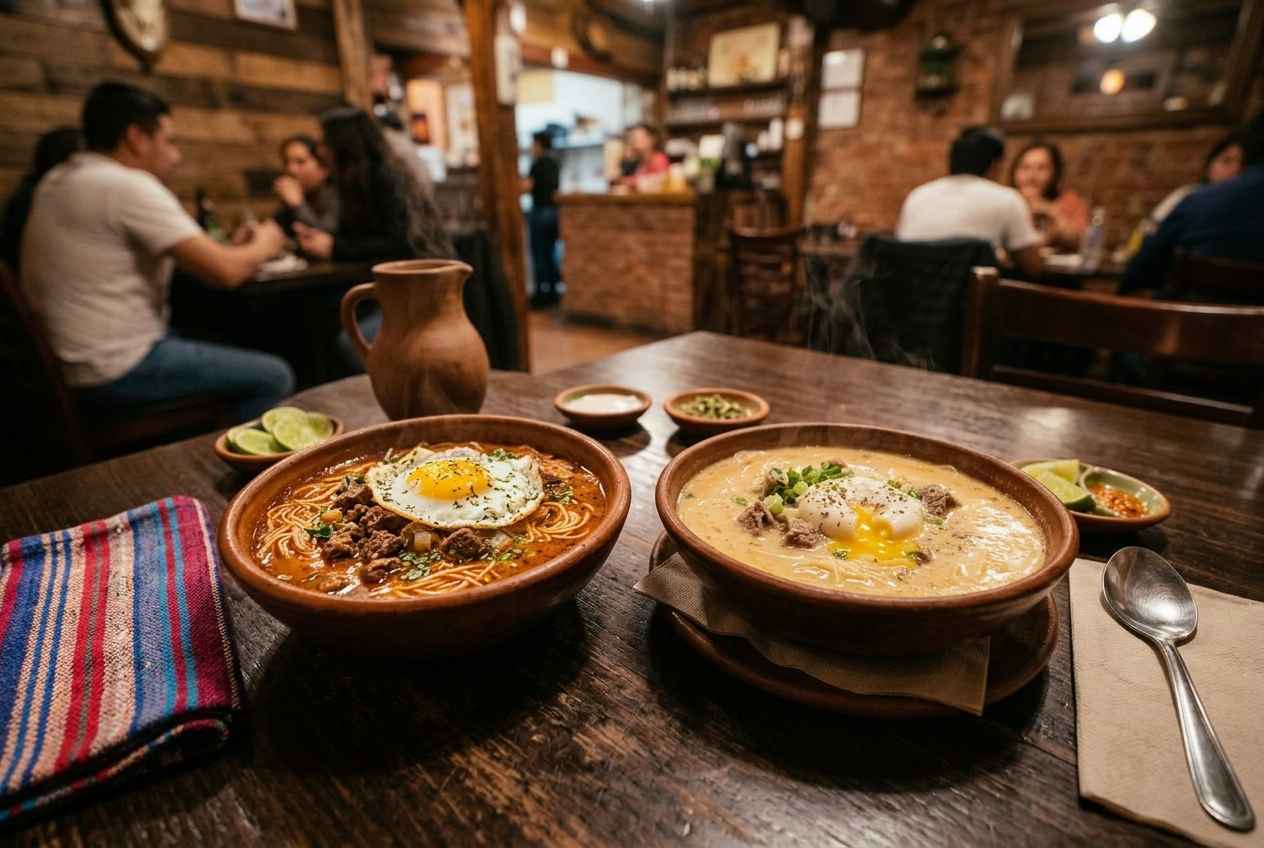
If you typed “sopa criolla near me” into Google tonight, you’re probably not looking for a recipe you’ll cook tomorrow — you want a hot bowl, somewhere close, right now. That’s a very specific kind of hunger, and most restaurant guides don’t actually answer it. They list five random Peruvian spots and call it a day, without telling you what separates a forgettable bowl of noodles-in-broth from the real thing: rich beef stock, a whisper of ají panca heat, a milky finish, and a poached egg breaking open in the center.
This guide is built to do two things at once. First, it teaches you exactly what authentic sopa criolla should look, smell, and taste like, so you can judge any restaurant’s version in seconds. Second, it walks you through a repeatable system for finding and vetting the best sopa criolla near your exact location — whether that’s a strip-mall Peruvian chifa, a family-run comedor, or a food truck that only shows up on weekends.
Quick Answer: How To Find the Best Sopa Criolla Near You
In a hurry? Here’s the short version:
- Search “Peruvian restaurant near me” or “sopa a la minuta near me” on Google Maps rather than the exact English phrase — many menus list it under its other name.
- Filter results by rating (4.3+) and read the most recent 15–20 reviews, not just the overall score.
- Look for reviews that specifically mention “sopa criolla,” “sopa a la minuta,” or “creole soup” — generic 5-star reviews about “great service” tell you nothing about the soup itself.
- Call ahead during lunch hours (11am–2pm) since many small Peruvian kitchens sell out of soup specials early.
- Prioritize restaurants run by Peruvian or Peruvian-American owners over generic “Latin fusion” menus, which tend to water down the ají panca and skip the evaporated milk finish entirely.
What Is Sopa Criolla, Exactly?
Sopa criolla — also called sopa a la minuta in many Lima households and restaurants — is a Peruvian beef and noodle soup built on a milky, lightly spiced broth. The name translates loosely to “creole soup,” and in Peruvian cooking, “criolla” doesn’t refer to a single ethnicity or region. It describes a style of cooking born from the blending of Spanish colonial technique with Indigenous Andean ingredients, later layered with African, Chinese, and Japanese influences that shaped Peru’s coast over centuries. Sopa criolla is one of the clearest, humblest examples of that fusion: a Spanish-style broth soup, made Peruvian with ají peppers, evaporated milk, and thin angel hair pasta.
At its core, the dish combines thin strips or ground pieces of beef, sautéed onion and garlic, tomato paste, and ají panca or ají amarillo paste, simmered in a good beef stock. Angel hair pasta goes in near the end so it doesn’t turn mushy, and just before serving, milk or evaporated milk is stirred in to give the broth its signature pale orange, slightly creamy color. The bowl is finished with a poached or fried egg on top, a scatter of chopped scallion, and a pinch of dried oregano. Break the yolk, let it run into the broth, and you have Peru’s answer to chicken noodle soup — a dish practically every Peruvian grew up eating on a rainy day, after a late night, or simply for a fast weekday lunch.
Where the Name “Criolla” Comes From
Understanding the word “criolla” helps you understand why the dish tastes the way it does, and why quality varies so much between restaurants. In colonial-era Latin America, “criollo/criolla” originally described people of Spanish descent born in the Americas rather than in Spain. Over generations the word expanded into a culinary term describing food that blended Spanish cooking methods with local, native ingredients. In Peru specifically, “cocina criolla” absorbed additional waves of influence: African cooks brought techniques and flavor combinations during the colonial period, and 19th- and 20th-century Chinese and Japanese immigration added new ingredients and stir-fry style methods that eventually gave rise to chifa cuisine.
Sopa criolla sits right at that intersection. It uses a European soup-making technique — searing meat, building a stock, finishing with dairy — but every flavor note that makes it distinct is Andean: the ají panca paste for a deep, fruity heat; the ají amarillo for brightness; oregano instead of European soup herbs like thyme or bay. That’s why a version made without any ají paste at all, however well-executed, isn’t really sopa criolla — it’s just beef noodle soup wearing the name.
What Real Sopa Criolla Should Taste Like
Before you can judge a restaurant, you need a mental benchmark. Here’s what separates an authentic, well-made bowl from a lazy imitation:
- The broth color: a pale, warm orange-cream, never fully white (too little ají or tomato) and never deep red (too much paste, poorly balanced).
- The heat level: gentle and rounded, not sharp or vinegary. Ají panca is a mild, smoky-sweet chili — it should warm the back of your throat, not make your eyes water.
- The pasta: thin angel hair, cooked just past al dente, never a thick spaghetti substitute, and never mushy from sitting in broth too long before serving.
- The beef: thin-sliced or coarsely ground, tender, never chewy or grey (which means it was boiled too long at too high a heat).
- The dairy finish: a light creaminess from milk or evaporated milk added at the very end. If it’s missing entirely, or if the broth tastes curdled or grainy, the kitchen added the milk too early and let it boil.
- The egg: a poached or soft-fried egg with a runny yolk, added right before serving, not scrambled into the broth.
- The garnish: fresh chopped scallion and a light dusting of dried oregano. Cilantro is a substitution some restaurants make, but traditional versions use oregano and scallion.
Once you know these seven markers, you can taste-test any bowl in under a minute and know whether the kitchen actually understands the dish, or is simply serving a generic noodle soup under a Peruvian name.
How To Actually Search for “Best Sopa Criolla Near Me” (Step by Step)
Search engines are decent at finding Peruvian restaurants near you, but they’re not great at finding the ones that make excellent sopa criolla specifically — that soup is rarely the headline dish on a menu dominated by lomo saltado, ceviche, and pollo a la brasa. Here’s a more precise process.
Step 1: Widen Your Search Terms
Don’t rely on the English phrase alone. Try each of these searches in Google or Google Maps, since different restaurants list the dish under different names:
- “sopa a la minuta near me”
- “Peruvian creole soup near me”
- “sopa criolla restaurant [your city]”
- “Peruvian restaurant near me” (then check the menu for soup section)
- “Peruvian comfort food [your neighborhood]”
Step 2: Filter by Recency, Not Just Star Rating
A 4.7-star restaurant with reviews from three years ago tells you less than a 4.3-star restaurant with a dozen glowing reviews from the last two months. Kitchens change owners, chefs move on, and portion sizes shrink. Sort Google Maps reviews by “Newest” and read the most recent 15 to 20 before trusting the overall average.
Step 3: Search Within Reviews for the Dish Name
Most map platforms let you search keywords inside a location’s reviews. Type “sopa criolla” or “sopa a la minuta” directly into that search box. If multiple recent reviewers mention the soup by name and describe it positively, that’s a far stronger signal than a restaurant’s overall rating, which is usually driven by their ceviche or rotisserie chicken instead.
Step 4: Check the Photos, Not Just the Menu Description
Menu descriptions are marketing copy. Photos — especially ones uploaded by other customers rather than the restaurant itself — show you the actual broth color, portion size, and whether the egg and garnish are really included. Look specifically for the pale orange broth and visible egg yolk described above.
Step 5: Call During Lunch Hours
Because sopa criolla is often a weekday lunch dish rather than a dinner showpiece, many small Peruvian kitchens make a limited batch and sell out by early afternoon. A quick call (“¿tienen sopa criolla hoy?” — “do you have sopa criolla today?”) saves you a wasted trip.
Step 6: Prioritize Family-Run Kitchens
Generic “Latin fusion” restaurants that serve dishes from six different countries rarely nail the specific technique sopa criolla requires — especially the late-added dairy step, which is easy to get wrong and ruins the broth if rushed. Restaurants explicitly labeled Peruvian, and especially ones that are family-owned or run by a Peruvian chef, are far more likely to serve an authentic version.
What Kind of Restaurant Is Most Likely To Serve It Well?
Not every type of restaurant treats sopa criolla the same way. Here’s how the main categories tend to compare:
Dedicated Peruvian Restaurants
Your best bet. Sopa criolla usually appears as a starter or a weekday lunch special (almuerzo) rather than a headline dinner item, so check the lunch menu specifically, not just the dinner card.
Peruvian Chifa Restaurants
Chifa restaurants blend Peruvian and Cantonese Chinese cooking. Sopa criolla isn’t always on a chifa menu, but when it is, the broth is often excellent because chifa kitchens are usually very skilled with stock-based soups in general.
Comedores and Small Family Kitchens
Informal, home-style Peruvian eateries (sometimes without much of an online presence) frequently serve the single best, most traditional version of the dish — because it’s a home-cooking staple, not a showcase item. These are worth seeking out even if their online reviews are thin.
Generic Latin Fusion Restaurants
Approach with caution. These menus often list “creole soup” as a novelty item without the technique to back it up — expect a thinner broth, missing egg, and little to no ají panca.
Food Trucks and Weekend Markets
Hit or miss, but often surprisingly good, since many are run by home cooks serving the exact recipe they grew up with. Check for recent, specific reviews before committing.
Sopa Criolla vs. Other Popular Peruvian Soups
If you’re near a Peruvian restaurant and sopa criolla isn’t available that day, it helps to know what else on the soup menu might scratch the same itch.
| Soup | Main Protein | Broth Style | Closest Comparison |
|---|---|---|---|
| Sopa Criolla (Sopa a la Minuta) | Beef | Milky, lightly spiced, tomato-ají base | Peruvian “chicken noodle soup” |
| Aguadito de Pollo | Chicken | Bright green, cilantro-forward, rice-thickened | Peruvian chicken and rice soup |
| Chupe de Pescado / Camarones | Fish or shrimp | Creamy, potato and milk-based chowder | Peruvian seafood chowder |
| Caldo de Gallina | Hen/chicken | Clear, rich, noodle and potato soup | Peruvian hangover-cure soup |
| Parihuela | Mixed seafood | Spicy, tomato-based seafood stew | Peruvian bouillabaisse |
If sopa criolla is unavailable, caldo de gallina is the closest substitute in spirit — both are humble, homestyle, comfort-food broths eaten for the same occasions: rainy days, hangovers, and quick weekday lunches.
What To Ask For When You Order
Once you’ve found a promising restaurant, a few small requests can make a real difference in what lands on your table:
- Ask about spice level. Some kitchens make it mild by default and keep extra ají panca or rocoto sauce on the side — ask for it if you want more heat.
- Ask if the egg is included. A few Americanized menus leave it off unless requested; it’s a defining part of the dish.
- Ask about dairy substitutions. If you’re avoiding dairy, ask whether they can leave out the milk/evaporated milk finish — note that this does change the flavor and color noticeably, since the dairy is part of what makes it “criolla” rather than a plain beef noodle soup.
- Ask if it’s a lunch-only item. As mentioned above, many kitchens only prepare it for the midday almuerzo menu.
- Ask what protein cut they use. Thin-sliced beef (bistec) generally gives a more tender result than coarsely ground beef, though both are traditional.
Can’t Find It Nearby? A Simple Homemade Version
If your search for “sopa criolla near me” comes up empty, the dish is genuinely simple enough to make at home in about 30–40 minutes. This isn’t a substitute for the full guide above — it’s a backup plan for when the nearest good Peruvian kitchen is an hour away.
What You’ll Need (serves 4)
- 1 lb thin-sliced or ground beef
- 1 chopped onion, 3–4 cloves garlic, minced
- 2 tbsp ají panca paste (the ingredient that makes it authentic — don’t substitute with generic chili paste if you can help it)
- 2 tbsp tomato paste
- 4–5 cups good beef stock
- 8 oz angel hair pasta, broken into short lengths
- 1 cup milk or evaporated milk
- 4 eggs
- Chopped scallion, dried oregano, salt and pepper
Method
- Sauté the onion and garlic in oil until soft, then stir in the ají panca and tomato paste for a minute to deepen the flavor.
- Add the beef, browning it briefly on all sides.
- Pour in the beef stock, season with salt, pepper, and oregano, and simmer for 10–15 minutes.
- Add the angel hair pasta and cook until just tender, about 4 minutes — don’t let it sit and overcook.
- Turn the heat to low and stir in the milk right at the end. Do not let it boil once the milk is added, or the broth can curdle.
- In a separate small pot, poach the eggs (or fry them softly).
- Ladle the soup into bowls, top each with an egg, and finish with scallion and a pinch of oregano.
The single most common home-cooking mistake is boiling the broth hard after the milk goes in — that’s what causes a grainy, separated texture instead of the smooth, velvety finish the dish is known for.
Nutrition Notes
Sopa criolla is a filling, protein-forward comfort dish rather than a light soup. A typical restaurant-sized bowl includes beef, pasta, egg, and dairy, so it lands closer to a full meal than a starter in terms of calories and protein. If you’re tracking intake, a few practical notes:
- Ask for it with less pasta and extra vegetables if you’re watching carbohydrates — some modern home versions add sweet potato, peas, or carrots.
- The egg adds meaningful protein and richness; ask for it on the side if you prefer to control that portion yourself.
- The dairy finish is usually light (a cup of milk across a 4–6 serving pot), so it’s not as heavy as a fully cream-based chowder like chupe de pescado.
- Sodium can run high in restaurant versions because of the beef stock base — if that matters to you, it’s worth asking how the stock is made.
Regional and Seasonal Variations Worth Knowing
Sopa criolla isn’t identical everywhere you find it, even within Peru. A few variations you might come across:
- Coastal Lima style: closest to the “classic” version described above — ají panca, evaporated milk, thin pasta, poached egg.
- Andean home-kitchen style: sometimes made with locally available root vegetables added to the pot, reflecting what a household has on hand.
- North American Peruvian-immigrant style: some restaurants and home cooks swap the pasta for whatever thin noodle is available locally, or lighten the dairy for taste preference — still recognizable, still worth trying, just slightly adjusted from the traditional version.
- Vegetarian adaptations: rare on traditional menus, but a small number of modern Peruvian restaurants now offer a mushroom or plant-based version using the same ají panca and milk base.
Red Flags: Signs a “Sopa Criolla” Isn’t the Real Thing
A few warning signs to watch for once your bowl arrives:
- The broth is thin, clear, and colorless — a sign no ají paste or tomato base was used at all.
- Thick spaghetti or regular pasta instead of angel hair.
- No egg, and the restaurant didn’t mention it was optional or extra.
- A sharp, vinegary heat instead of the gentle, smoky warmth of ají panca.
- A curdled or separated appearance in the broth, suggesting the milk was added too early and boiled.
None of these make a soup inedible — but they’re useful signals that the kitchen may not specialize in traditional Peruvian technique, which is worth knowing before you order it again.
Frequently Asked Questions
Is sopa criolla the same as sopa a la minuta?
Yes. “Sopa a la minuta” is the more common name in many Peruvian households and restaurant menus, while “sopa criolla” describes the same dish by its culinary style. You’ll see both names used interchangeably, sometimes even on the same menu.
What does “criolla” mean in Peruvian cooking?
In this context, “criolla” refers to Peru’s coastal, creole-style cuisine — dishes that blend Spanish cooking technique with Andean ingredients like ají peppers, later layered with African, Chinese, and Japanese culinary influences.
Is sopa criolla spicy?
Generally mild to medium. Ají panca, the main chili used, is known for smoky, fruity flavor rather than intense heat. Most restaurants keep it gentle by default and offer extra spice on request.
What’s the difference between ají panca and ají amarillo?
Ají panca is a dark red, mild, smoky-sweet pepper typically used as a paste in the soup’s base. Ají amarillo is a bright yellow-orange pepper with a sharper, fruitier heat, sometimes used alongside or instead of ají panca depending on the recipe.
Can I get sopa criolla without egg or dairy?
Most restaurants can leave off the egg on request. Removing the milk is possible too, but it changes the dish meaningfully — the dairy finish is part of what defines “criolla” style, so a dairy-free version will taste noticeably different from the traditional bowl.
Why can’t I find sopa criolla on some Peruvian menus?
It’s often treated as a lunch-only, homestyle dish rather than a dinner showpiece, so it may only appear on a restaurant’s weekday almuerzo (lunch) menu rather than the main dinner card.
What’s the best time of day to order it?
Lunch. Many small Peruvian kitchens prepare a limited batch for the midday menu and may not have it available by dinner.
Is sopa criolla the same as chicken noodle soup?
Not exactly, though it plays a similar cultural role — it’s Peru’s go-to comfort soup for rainy days, hangovers, and quick lunches. The base protein is beef rather than chicken, and the broth includes ají panca, tomato, and a milk finish that chicken noodle soup doesn’t have.
How do I know if a restaurant’s version is authentic?
Check for the seven markers covered earlier in this guide: a pale orange (not clear, not deep red) broth, gentle ají heat, thin angel hair pasta, tender beef, a light dairy finish, a runny egg, and a scallion-and-oregano garnish.
Can I freeze leftover sopa criolla?
The broth and beef freeze reasonably well, but it’s best to freeze the base without the pasta, egg, or milk, then add fresh pasta, a freshly poached egg, and the dairy finish when reheating — otherwise the pasta turns mushy and the milk-based broth can separate after thawing.
How AI Search and Voice Assistants Answer “Sopa Criolla Near Me”
Increasingly, “best sopa criolla near me” isn’t just typed into a search bar — it’s spoken to a voice assistant or asked directly to an AI chat tool. Those systems tend to pull from a mix of map-based business data, recent review text, and structured content on restaurant and food websites. That has a practical effect on how you should search, and it’s worth understanding even as a customer rather than a restaurant owner.
- AI answer engines favor specificity. A question like “which restaurant near me makes sopa criolla with a poached egg and evaporated milk broth” tends to surface better, more targeted answers than a vague “good Peruvian food near me” query, because it gives the system concrete details to match against menu text and reviews.
- Review language matters more than star ratings. AI-driven summaries lean heavily on what reviewers actually wrote, not just their numeric score. A handful of detailed reviews describing the broth, the egg, and the spice level will influence an AI-generated recommendation far more than a large number of generic five-star reviews.
- Freshness carries weight. Because AI systems are increasingly trained or updated to prioritize recent information, a restaurant with recent 2025–2026 mentions of its sopa criolla specifically will typically be recommended over one whose only mentions are several years old, even if the older restaurant is technically higher rated overall.
- Structured, clear content wins. Whether you’re reading a food blog, a restaurant’s own site, or a guide like this one, content that plainly defines the dish, lists concrete quality markers, and answers direct questions (as in the FAQ section above) is easier for both search engines and AI systems to extract accurate answers from — which is part of why guides in this format tend to surface in both traditional search results and AI-generated summaries.
Ordering Through Delivery Apps: What To Check First
If you’re searching from a delivery app rather than Google Maps directly, a few extra steps help you avoid a disappointing bowl showing up at your door:
- Search the app’s menu-item search, not just restaurant names. Most delivery apps let you search for a specific dish across every restaurant near you — type “sopa criolla” or “sopa a la minuta” directly rather than browsing by cuisine category, since some Peruvian spots bury it deep in a long menu.
- Check the item photo, not just the restaurant’s cover photo. A restaurant can have an appealing storefront image while the actual soup photo shows a thin, egg-less bowl. If there’s no photo of the dish itself, that’s often a sign it’s a rarely-ordered item.
- Read item-level reviews when available. Some delivery platforms show ratings per dish, not just per restaurant. A restaurant with a strong overall rating but a mediocre score specifically on its soups is worth a second look before ordering.
- Consider transit time. Sopa criolla’s broth and pasta don’t travel as well as, say, a rice dish — a 10-minute delivery will taste noticeably better than a 40-minute one, since the pasta continues absorbing broth in the container and can turn soft.
- Ask for the egg and scallion on the side if offered. Some delivery packaging keeps the egg separate specifically so it doesn’t overcook in transit — if that option exists, take it.
A Short Glossary for Reading Peruvian Menus
A few terms that come up often around sopa criolla and its neighbors on a Peruvian menu:
- Ají — the general term for chili pepper in Peruvian cooking; almost every savory Peruvian dish starts with one variety or another.
- Ají panca — a dark red, mild, smoky-sweet dried chili, usually sold as a paste; the backbone of sopa criolla’s flavor and color.
- Ají amarillo — a bright yellow-orange chili with sharper, fruitier heat, common across many Peruvian dishes beyond just soup.
- Criollo/criolla — describes Peru’s coastal, creole-influenced cooking style, blending Spanish technique with Andean, African, and Asian influences.
- Chifa — Peruvian-Chinese fusion cuisine and the restaurants that serve it; some chifa spots serve excellent versions of classic Peruvian soups.
- Almuerzo — the midday lunch menu at many Peruvian restaurants, often where homestyle dishes like sopa criolla actually appear, rather than the dinner menu.
- Comedor — a small, informal, often family-run eatery; frequently the best place to find traditional home-style cooking, sopa criolla included.
Where Sopa Criolla Fits in Peru’s Bigger Food Culture
Peru’s food scene has drawn global attention over the past two decades, largely through high-end dishes like ceviche and lomo saltado. But dishes like sopa criolla represent the other, quieter half of that story — the homestyle cooking that Peruvian families actually eat most often. Understanding Peruvian cuisine’s broader fusion roots makes it easier to appreciate why a “simple” noodle soup carries so much technique and history in a single bowl. If you enjoyed learning how to evaluate a near-me search for a specific regional dish, the same approach works well for other specific, easy-to-mishandle dishes — our guide to finding the best Pollo al Chilindron near you uses a similar quality checklist for a completely different cuisine, and our broader look at what’s actually showing up on menus in 2026 is a useful companion read if you’re exploring what else is worth ordering this year.
Etiquette Notes for First-Timers
If this is your first time ordering sopa criolla, a few small cultural notes make the experience smoother:
- It’s perfectly normal to break the egg yolk into the broth yourself with a spoon — that’s how it’s meant to be eaten, not left whole on top.
- Don’t be surprised if it’s served as a starter-sized portion at dinner but a full meal-sized portion at lunch; portion size often depends on whether it’s positioned as an appetizer or an almuerzo main.
- Bread isn’t traditionally served alongside it the way it might be with a European soup — the pasta itself provides the starch.
- If a restaurant offers rocoto sauce or extra ají on the side, a small amount goes a long way; these condiments are noticeably hotter than the ají panca used in the broth itself.
“Best sopa criolla near me” is a deceptively specific search. Because the dish is often treated as a humble, lunch-only staple rather than a menu centerpiece, the restaurants that make it best aren’t always the ones that show up first in generic “top Peruvian restaurants” lists. Use the search strategy above — widening your search terms, reading recent reviews for the dish by name, checking customer photos, and calling ahead during lunch hours — and you’ll have a far better shot at finding a bowl that actually delivers the real thing: a warm, lightly spicy, milk-finished broth with a runny egg at the center, exactly the way it’s made in Peruvian kitchens.