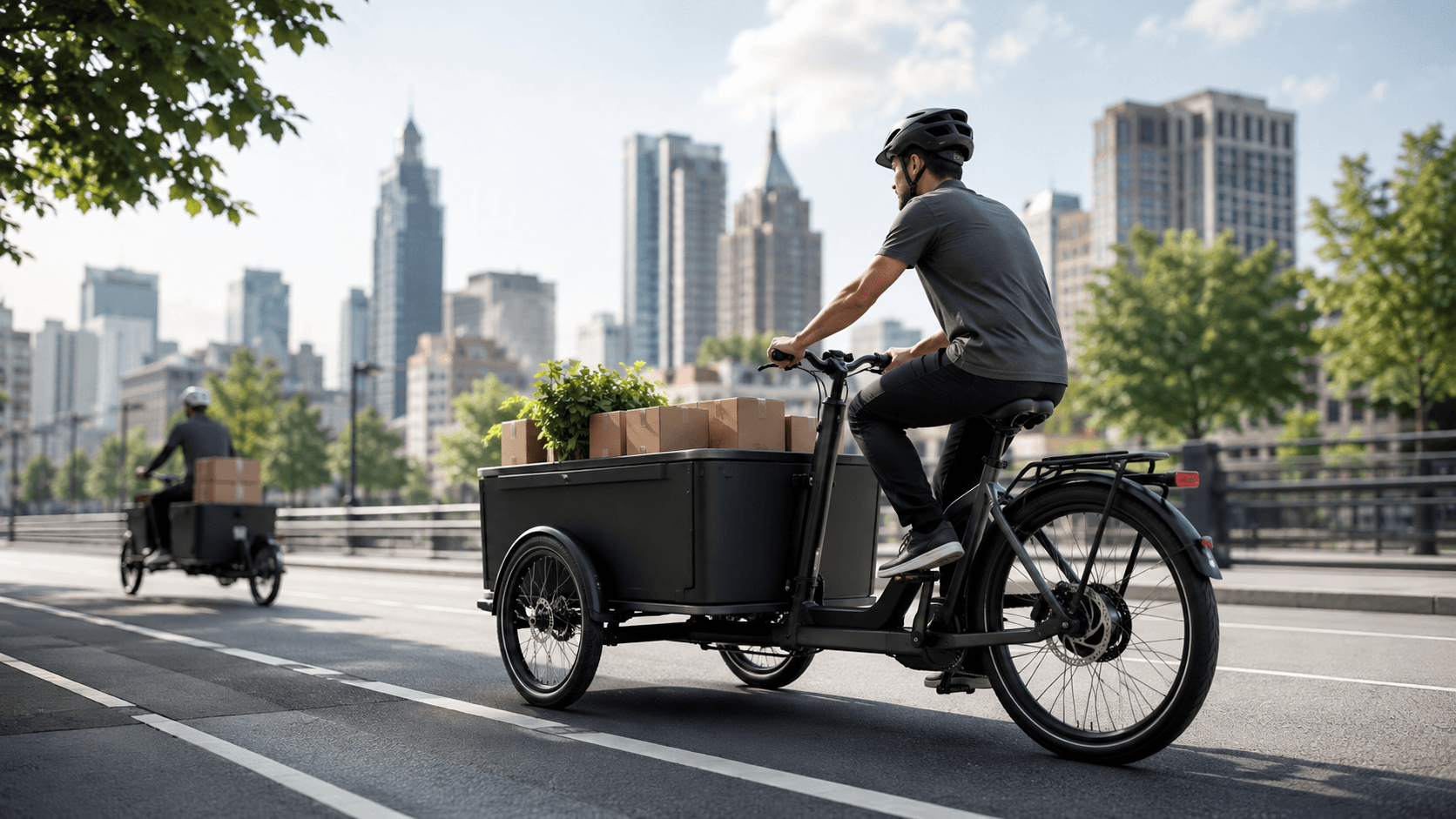
Electric cargo bikes are e-bikes built to carry heavy loads such as children, shopping, or goods, with a motor that assists pedalling. The main types are longtail, front-loader, trike, and compact designs. In the UK, one that meets the 250 watt, 15.5 mph assist limit is treated as a normal bicycle.
Key takeaways
- Choose between longtail, front-loader, trike, or compact styles based on your loads and storage.
- Benefits include low running costs, easy parking, less congestion, and lower emissions.
- Check payload rating, motor type, battery range, brakes, and safety standards before buying.
- Legal rules differ by country, so check your local e-bike regulations.
In this guide
- What Is an Electric Cargo Bike?
- Main Types of Cargo Bikes
- Benefits of Electric Cargo Bikes
- Drawbacks to Consider
- Legal Rules for Electric Cargo Bikes
- What to Check Before You Buy
- Cargo Bikes for Business
- Maintenance and Safety Tips
- Frequently Asked Questions
Last updated: October 2026
Electric cargo bikes are changing the way people carry children, shopping, tools, and parcels. They combine a large load area with a motor that makes heavy loads and hills manageable. This guide explains the main types, the benefits and drawbacks, the legal rules, and what to check before you buy.
What Is an Electric Cargo Bike?
An electric cargo bike is a bicycle designed to carry heavy or bulky loads, with an electric motor that helps when you pedal. The frame, wheels, and brakes are built to cope with more weight than a standard bike, and many have a large rack, box, or platform for cargo or passengers.
Main Types of Cargo Bikes
| Type | Description | Best for |
|---|---|---|
| Longtail | Extended rear section with space for bags and child seats | Families and commuters who want something close to a normal bike |
| Front-loader (box bike) | A cargo box or platform in front of the rider | Children, shopping, and visible, stable carrying |
| Cargo trike | Three wheels, stable when stationary | Heavy loads, riders who want extra stability, and some disabled riders |
| Compact cargo bike | Smaller wheels and a shorter frame | Small homes, city storage, and lighter loads |
Benefits of Electric Cargo Bikes
- Lower running costs: no fuel, and cheap electricity compared with petrol or diesel.
- Easy parking and access: they can use cycle lanes and fit places cars cannot.
- Beat congestion: they are often quicker than cars over short urban trips.
- Lower emissions: no tailpipe emissions and much lower energy use per trip.
- Health benefits: they add gentle activity to daily routines.
- Business use: useful for local deliveries, trades, and street food, and more cities are adding schemes and incentives for them.
Drawbacks to Consider
- Price: good models can cost much more than regular e-bikes.
- Size and weight: they are long and heavy and need secure storage.
- Theft risk: they are valuable, so strong locks and insurance matter.
- Learning curve: handling a long, loaded bike takes practice.
- Battery range: heavy loads, hills, and cold weather reduce it.
Legal Rules for Electric Cargo Bikes
Rules depend on the country and region.
- United Kingdom: an electrically assisted pedal cycle (EAPC) must have pedals that propel it, a motor of no more than 250 watts continuous rated power, and assistance that cuts out at 15.5 mph (25 km/h). Riders must be at least 14. If it meets these rules it is treated as a normal bicycle with no licence, tax, or insurance required. See the GOV.UK electric bike rules.
- European Union: pedelecs generally follow a 250 watt and 25 km/h limit, and standards such as EN 15194 apply.
- United States: many states use a three-class system based on assist speed and throttle, such as Class 1 (pedal assist up to 20 mph), Class 2 (throttle up to 20 mph), and Class 3 (pedal assist up to 28 mph). Local rules differ. PeopleForBikes tracks e-bike laws.
Check the rules where you live, including the rules on carrying children and on cycle lane use.
What to Check Before You Buy
- Payload and passenger rating. Check the maximum total load and the number and age of children it is designed to carry.
- Motor type. Mid-drive motors tend to handle hills and heavy loads well, while hub motors can be simpler and cheaper.
- Battery size and range. Think about your typical load, route, and hills, and choose capacity with a margin.
- Brakes. Hydraulic disc brakes are common on cargo bikes because of the weight.
- Stability and kickstand. A strong double-leg stand is useful when loading children.
- Child seats and safety features. Look for secure harnesses, footrests, and tested accessories.
- Test ride with a load if possible.
- Service support. Make sure the supplier offers parts and servicing.
- Safety standards. Look for compliance with recognised e-bike standards such as EN 15194 in Europe and UL 2849 for electrical systems in the US.
Cargo Bikes for Business
Small businesses use electric cargo bikes for last-mile deliveries, catering, mobile services, and tool transport. Benefits include lower vehicle costs, easier access to pedestrian and low-emission zones, and a positive brand image. Compare the running costs against a van, including insurance, parking, and maintenance, and think about loading limits, weather, and delivery distances. If you are planning a small business around deliveries, our guide on how to start a catering business covers the basics of planning and pricing.
Maintenance and Safety Tips
- Keep tyres at the right pressure, especially with heavy loads.
- Check brakes before every ride.
- Use the charger supplied with the bike, and do not leave a battery charging unattended.
- Store batteries in a cool, dry place.
- Wear a helmet, and use lights and reflective gear.
- Have the bike serviced regularly, and lock it with a strong lock and ground anchor.
Frequently Asked Questions
It is an e-bike designed to carry heavy or bulky loads, with a motor that assists pedalling and a frame, brakes, and wheels built for extra weight.
Not if it meets the EAPC rules: pedals that propel it, a 250 watt limit, and assistance that cuts out at 15.5 mph. Riders must be at least 14.
Longtail, front-loader (box bike), cargo trike, and compact cargo bikes.
It varies by model. Check the manufacturer stated payload and passenger limits.
For many families and small businesses, yes, because they can replace short car trips and cut running costs, though the initial price is high.
Range depends on battery size, load, terrain, and assist level. Heavy loads and hills reduce it, so choose a battery with margin.
This article is general information. Laws and safety standards differ by country, so check local rules and the manufacturer guidance.