The best Disney World tips for first-timers are to choose a less crowded time, plan dining and your must-do rides in advance, arrive early, take midday breaks, and stay hydrated, fed, and shaded to avoid heat illness and headaches. Always check the official website and app for current prices, rules, and skip-the-line options.
Key takeaways
- Visit in quieter seasons if you can, and plan for Florida heat, storms, and hurricane season.
- Arrive early, do the popular rides first, and rest in the middle of the day.
- Drink water, eat regularly, protect yourself from the sun, and learn the signs of heat illness.
- Prices and ticket products change, so confirm details on the official site and app.
In this guide
- When to Visit Disney World
- How Many Days Do You Need?
- Planning Your Trip
- Tips for Each Day at the Parks
- How to Avoid Heat, Dehydration, and Headaches
- What to Pack
- Tips for Families With Young Children
- Tips for Solo Travellers and Couples
- Saving Money
- Common Mistakes First-Timers Make
- Frequently Asked Questions
Last updated: October 2026
Walt Disney World is huge, hot, and busy, and many first-time visitors come home tired, sunburnt, and surprised by how much walking and waiting is involved. The good news is that a little planning makes a big difference. This guide gives practical Disney World tips for first-timers: when to go, how to plan your days, how to avoid heat and headaches, and how to keep costs and stress under control. Park rules, prices, and ticket products change often, so always confirm details on the official Walt Disney World website.
When to Visit Disney World
- Crowds: school holidays, major holidays, and summer are usually the busiest. Mid-week visits and quieter seasons tend to be calmer. Crowd calendars from sites such as TouringPlans can help you choose.
- Heat and humidity: Florida summers are very hot and humid, with frequent afternoon thunderstorms.
- Hurricane season: it runs from June to November, so consider flexible bookings and travel insurance for those months.
- Cooler months: late autumn and early spring often offer more comfortable temperatures.
How Many Days Do You Need?
| Length of trip | Good for |
|---|---|
| 3 days | A taste of the highlights, with limited rest |
| 4 to 5 days | Most families, with time for all four theme parks and a break |
| 6 or more days | A relaxed pace, water parks, and extra downtime |
Plan at least one lighter day for resting by the pool, especially with young children.
Planning Your Trip
- Set a realistic budget. Tickets, hotels, food, transport, and extras add up quickly. For budgeting basics, see our guides to financial planning and personal finance.
- Choose where to stay. Staying on Disney property can offer convenience, while off-site hotels may cost less. Compare transport and total costs.
- Book dining early. Popular table-service restaurants can fill up well in advance.
- Download the official app. The My Disney Experience app shows wait times, maps, mobile orders, and park hours.
- Understand skip-the-line options. Disney offers paid and free ways to reduce waiting, but names, prices, and rules change, so read the current official information before you buy.
- Make a flexible plan. Choose your must-do rides and shows, then leave room for surprises.
Tips for Each Day at the Parks
- Arrive early. The first hour usually has the shortest queues, and the weather is cooler.
- Do the most popular rides first. Waits tend to grow later in the day.
- Take a midday break. Return to the hotel or find a cool, shaded spot. Evening shows and fireworks are easier when you are rested.
- Use single rider lines where available if you do not mind being separated.
- Check wait times regularly in the app and move to attractions with shorter waits.
- Mobile order food to avoid long queues at meal times.
How to Avoid Heat, Dehydration, and Headaches
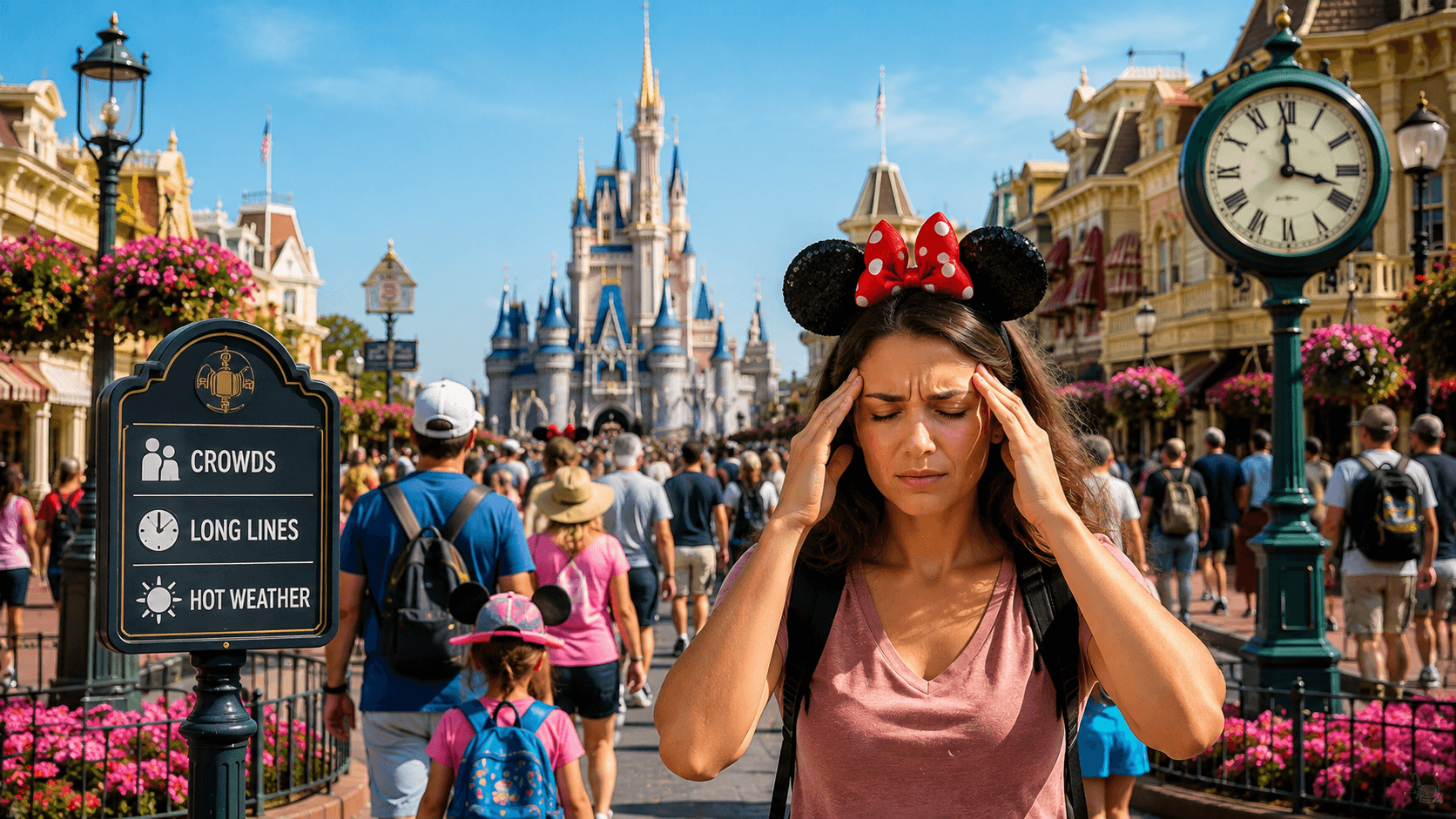
Many visitors get headaches at theme parks because of heat, dehydration, bright sun, lack of sleep, skipped meals, and noise. You can reduce the risk with a few habits:
- Drink water often, not just when you feel thirsty. Refill a reusable bottle at water stations.
- Eat regular meals and snacks so your energy and blood sugar do not drop.
- Wear sunglasses and a hat, and use sunscreen. Reapply it during the day. The American Academy of Pediatrics has advice on sun safety for children.
- Take shade and air-conditioned breaks, and slow down in the hottest hours.
- Dress for the heat: light, breathable clothing and comfortable, broken-in shoes.
- Sleep well. A restful hotel room helps you cope with long days. Our guide to choosing bedding has simple ideas for better sleep.
- Know the warning signs of heat illness: heavy sweating, dizziness, nausea, weakness, confusion, or a headache that gets worse. The CDC heat and health pages explain what to do. Find shade, cool down, drink fluids, and get medical help if symptoms are severe.
If you have a medical condition or get frequent migraines, talk to your doctor before travelling and carry any prescribed medicines in your hand luggage.
What to Pack
| Item | Why |
|---|---|
| Comfortable shoes and spare socks | You will walk many miles a day |
| Sunscreen, hat, sunglasses | Strong sun protection |
| Reusable water bottle | Stay hydrated and save money |
| Portable phone charger | The app drains the battery |
| Rain poncho | Quick storms are common |
| Snacks and basic first aid | Plasters for blisters, pain relief if suitable for you |
| Small backpack or bag | Check current bag rules before you go |
Tips for Families With Young Children
- Plan naps or rest time, and expect to move slower.
- Check height requirements for rides before you go.
- Agree on a meeting point in case someone gets separated.
- Bring a stroller or consider renting one.
- Talk to children about managing disappointment, such as long lines or missed rides. Our guide on raising resilient kids may help.
Tips for Solo Travellers and Couples
Disney World can work well for visitors without children, with more flexibility to use single rider lines and enjoy dining and evening events. See our general advice in solo travel tips.
Saving Money
- Compare ticket options and avoid buying more days or extras than you will use.
- Bring snacks and refillable water bottles where allowed.
- Look for official discounts or packages, and be careful with third-party sellers.
- Decide your souvenir budget before you go, particularly with children.
Common Mistakes First-Timers Make
- Trying to do everything. Pick priorities and accept you will miss some things.
- Wearing new shoes. Blisters can ruin a day.
- Forgetting to drink water and eat. It is a common cause of headaches and bad moods.
- Not planning for crowds and weather. Have a plan for storms and busy times.
- Buying from unofficial ticket sellers. Stick to authorised sources.
Frequently Asked Questions
Four to five days suit most first-time visitors, giving time to see the main parks with a rest day. Shorter trips need more planning.
Quieter periods outside school holidays and major holidays, often in late autumn and early spring, usually have smaller crowds and milder weather.
Stay hydrated, eat regular meals, wear sunglasses and a hat, take shade breaks, and sleep well. See a doctor if you get frequent migraines.
Light, breathable clothing and comfortable, broken-in shoes. Bring a hat, sunscreen, and a poncho for rain.
Yes. The official app shows wait times, maps, park hours, and mobile ordering, which can save time.
Set a budget, compare ticket options, bring water bottles and snacks where allowed, and buy tickets only from official or authorised sellers.
This article is general travel advice. Disney prices, rules, and products change often, so check official sources. See a doctor for medical concerns.