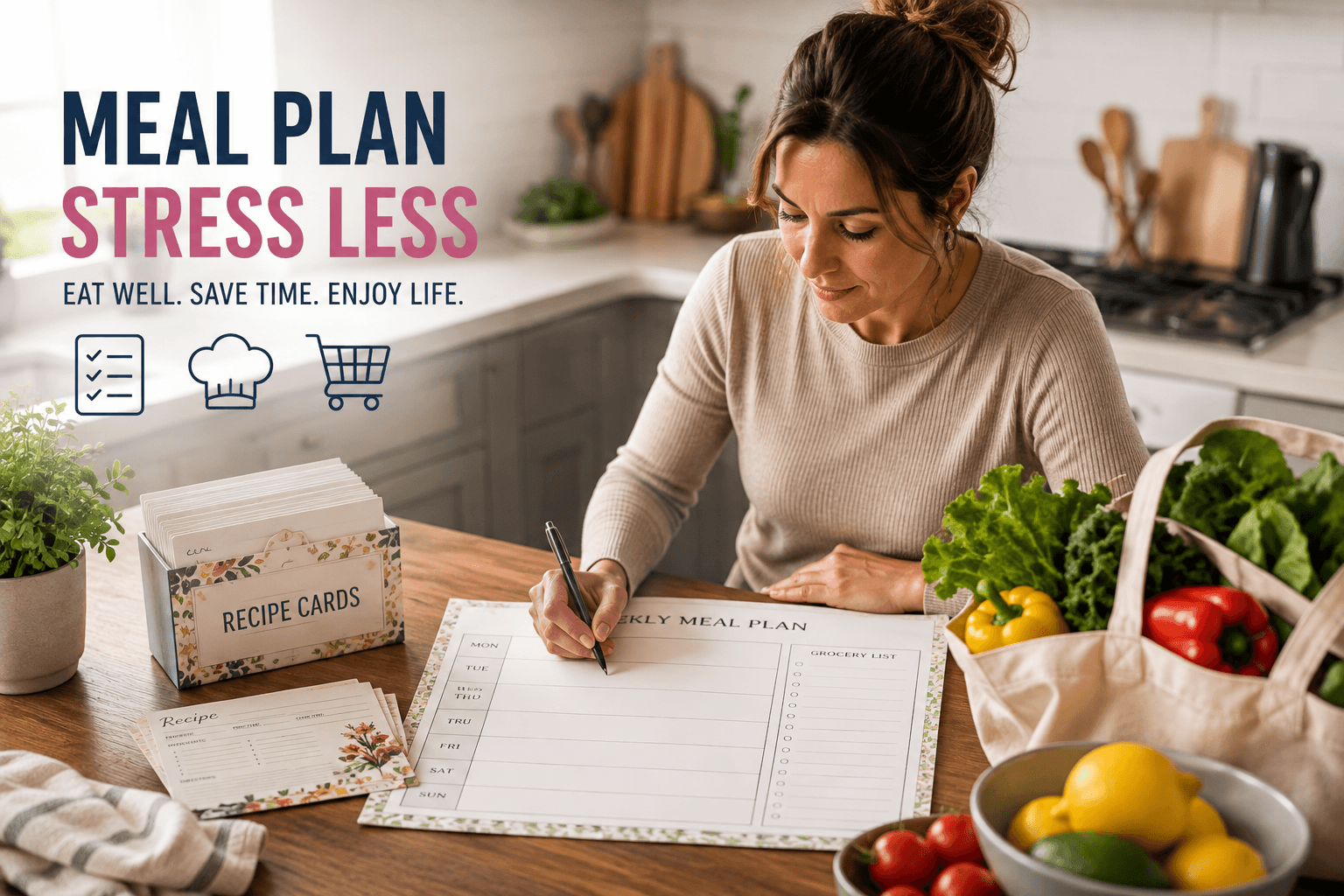
To stop the “what is for dinner?” stress, use a weekly meal planner: check what you already have, look at your busy evenings, pick four or five dinners, write the shopping list from the plan, and put the plan where everyone can see it. Deciding once a week removes the daily decision and reduces food waste and last-minute takeaways.
Key takeaways
- Plan once a week in about 10 to 20 minutes instead of deciding every evening.
- Plan four or five dinners, and leave room for leftovers and one flexible night.
- Stock a simple pantry and batch cook so there is always a quick option.
- Share the planning, chill leftovers promptly, and adjust the plan rather than quitting.
In this guide
- Why "What's for Dinner?" Feels So Stressful
- The 10-Minute Weekly Meal Planning System
- A Simple Weekly Planner Template
- A Sample Week of Easy Dinners
- 5 Dinner Formulas That Remove Decision Fatigue
- Stock a Simple Pantry
- Batch Cooking and Prep Shortcuts
- Leftovers and Food Safety
- Save Money and Reduce Food Waste
- Share the Mental Load
- Common Mistakes With Meal Planning
- Tips to Keep the System Going
- Frequently Asked Questions
Last updated: October 2026
It is 5 p.m., you are tired, and you are staring into the fridge with no idea what to cook. Many busy adults, especially those juggling work, family, and a household, know this moment well. The stress is rarely about cooking itself. It comes from having to decide what to make, find the ingredients, and do it all again tomorrow. This guide gives you a simple weekly meal planning system you can set up in about 10 to 20 minutes, with a planner template, a sample week, shopping and storage tips, and ways to share the load.
Why “What’s for Dinner?” Feels So Stressful
- It is a daily decision. Making the same choice every evening is tiring when you are already busy.
- It comes at the worst time. People are often hungry and low on energy at the end of the day.
- It hides extra tasks. Planning, shopping, remembering what is in the cupboard, and cleaning up all sit behind the question.
- It often falls on one person. The planning work is easy to overlook, which adds to the feeling of mental overload.
A system takes the daily decision away. You decide once a week, and the rest of the week simply follows the plan.
The 10-Minute Weekly Meal Planning System
- Check what you already have. Look in the fridge, freezer, and cupboards, and note items to use up first.
- Look at the week ahead. Mark busy evenings, late meetings, school activities, and nights when someone eats elsewhere. Plan quick meals for busy nights.
- Pick 4 to 5 dinners, not 7. Leave room for leftovers and one flexible night.
- Write the shopping list from the plan. Group it by store section so you shop quickly and avoid impulse buying.
- Put the plan where everyone can see it. A fridge door, a shared note, or a phone calendar works well.
A Simple Weekly Planner Template
| Day | Plan type | Your meal |
|---|---|---|
| Monday | Quick and easy | |
| Tuesday | Batch-cooked meal | |
| Wednesday | Leftovers or freezer meal | |
| Thursday | One-pan or slow cooker | |
| Friday | Fun night or takeaway budget | |
| Saturday | Cook something new | |
| Sunday | Prep night and family meal |
You can draw this on paper, copy it into a notes app, or use printable planners and recipe cards. One example of a shop selling printable cards and planners is DaffodilsPrints on Etsy. Choose whichever format you will actually use.
A Sample Week of Easy Dinners
| Day | Dinner idea | Time-saver |
|---|---|---|
| Monday | Stir-fry with vegetables and rice | Use pre-chopped or frozen vegetables |
| Tuesday | Big pot of chilli or lentil stew | Make double and freeze half |
| Wednesday | Leftover chilli on baked potatoes | No new cooking needed |
| Thursday | Sheet-pan chicken or tofu with vegetables | One tray, little washing up |
| Friday | Homemade pizza or wraps | Let everyone build their own |
| Saturday | Pasta with a new sauce | Try one new recipe |
| Sunday | Roast or slow-cooked dish | Cook extra for lunches |
Adapt these ideas to your tastes, culture, budget, and any allergies or dietary needs in your household.
5 Dinner Formulas That Remove Decision Fatigue
- Protein + vegetable + carbohydrate. For example, fish, broccoli, and potatoes.
- Bowl meals. Rice or grains, vegetables, a protein, and a sauce.
- One-pan or sheet-pan meals. Everything cooks together.
- Soup or stew plus bread. Easy to batch cook and freeze.
- Build-your-own nights. Tacos, wraps, jacket potatoes, or pizza, where each person chooses toppings.
Stock a Simple Pantry
A few staples mean you can always make something, even when the plan changes.
| Category | Examples |
|---|---|
| Grains and carbohydrates | Rice, pasta, oats, noodles, tortillas, potatoes |
| Tins and jars | Tomatoes, beans, chickpeas, lentils, tuna, coconut milk, stock |
| Freezer | Vegetables, fruit, bread, fish, chicken, and portions of cooked meals |
| Flavour | Garlic, onions, herbs, spices, soy sauce, curry paste, olive oil |
| Fresh basics | Eggs, cheese or alternatives, yoghurt, salad, and seasonal vegetables |
For healthy-eating guidance, the NHS Eatwell Guide in the UK and MyPlate in the US show how to balance meals. If you want to add more whole grains, see our guide to ancient grains.
Batch Cooking and Prep Shortcuts
- Cook once, eat twice. Make double portions of soups, stews, sauces, and curries.
- Cook grains in bulk. Rice and pasta can be used in several meals.
- Chop vegetables for two or three days at once.
- Marinate in advance. Put meat, fish, or tofu in a marinade in the morning or the night before.
- Label freezer bags with the date and contents.
Leftovers and Food Safety
- Cool leftovers quickly and put them in the fridge within about two hours, or sooner in hot weather. The US Department of Agriculture gives detailed advice on leftovers.
- Cool cooked rice quickly and refrigerate it soon after cooking, as rice can be a food safety risk if left at room temperature.
- Eat refrigerated leftovers within a few days, and reheat them until steaming hot all the way through.
- The UK Food Standards Agency offers guidance on chilling, freezing, and reheating.
Save Money and Reduce Food Waste
- Plan meals around what you already have and what is on offer.
- Use a shopping list, and stick to it.
- Freeze food before it spoils.
- Use up leftovers in wraps, soups, fried rice, or omelettes. Love Food Hate Waste has many ideas.
For more ways to cut waste and costs, read our guide on how to reduce household waste, and use our articles on personal finance and financial planning to build a grocery budget that works.
Share the Mental Load
- Make planning a shared task. Rotate who chooses the week’s meals.
- Give each family member a job, such as washing vegetables, setting the table, or loading the dishwasher.
- Let children pick one meal each week, within a few options.
- Use a shared list or app so anyone can add items as they run out.
Common Mistakes With Meal Planning
- Planning too many new recipes at once.
- Not leaving space for leftovers or a flexible night.
- Buying ingredients for aspirational meals that never get cooked.
- Skipping the check of what you already have.
- Giving up after one off week. Adjust the plan and restart.
Tips to Keep the System Going
- Pick the same time each week for planning.
- Keep a short list of 10 to 15 meals your household enjoys, and rotate them.
- Review what worked at the end of each week and note changes.
- Protect your sleep and energy. A rested mind makes better decisions, and our guide to choosing bedding for better sleep may help.
Frequently Asked Questions
Plan your dinners once a week, shop from a list, and keep a few quick backup meals. Removing the daily decision is the biggest stress reducer.
Four or five is a good start. Leave space for leftovers, a freezer meal, or a flexible night.
Look at your week, pick a few simple meals you already like, write a shopping list from them, and put the plan somewhere visible.
It reduces impulse buys, food waste, and last-minute takeaways because you shop from a list and use what you have.
Refrigerated leftovers are usually kept for a few days, and should be reheated until steaming hot. Follow food safety guidance from your local authority.
Choose a base meal, such as bowls or build-your-own nights, and let each person add suitable toppings or sides.
This article is general information, not medical or dietary advice. Adapt meals to your own dietary needs and food allergies, and follow local food safety guidance.