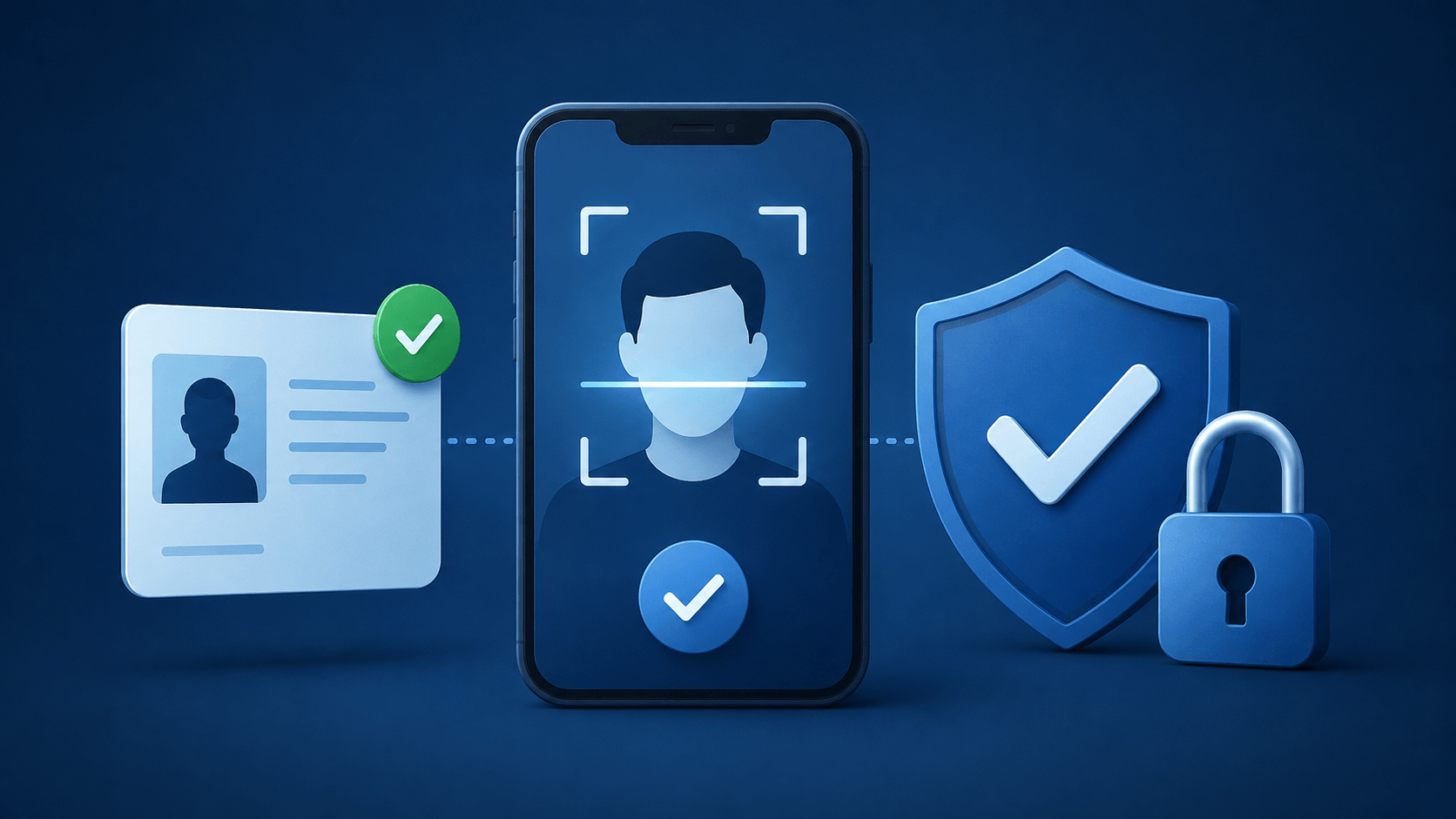
KYC verification is how banks, fintech apps, brokers, and other regulated businesses confirm that a customer is who they claim to be. KYC stands for “Know Your Customer”, and it is one of the main defences against fraud, identity theft, and money laundering.
This guide explains what KYC is, how the process works step by step, which documents are usually needed, how digital KYC differs from the paper version, and what businesses must do to stay compliant.
What Is KYC Verification?
KYC is a set of checks a business performs before it opens an account or starts a relationship with a customer, and then repeats over time. The goal is simple: confirm identity, understand the customer’s purpose, and spot unusual behaviour. KYC is a core part of wider anti-money laundering (AML) programmes, which we cover in our guide to predicate offenses in AML compliance.
Why KYC Matters
- Prevents fraud: stops criminals opening accounts with stolen or fake identities.
- Fights money laundering: makes it harder to move illegal funds through legitimate institutions.
- Meets legal duties: regulators require KYC, and failures can bring heavy fines.
- Builds trust: customers feel safer using a platform that verifies its users.
The 4 Steps of the KYC Process
1. Customer Identification Programme (CIP)
The business collects basic details such as full name, date of birth, address, and a government-issued ID number, then verifies them against trusted documents or databases.
2. Customer Due Diligence (CDD)
The business assesses the customer’s risk level. It asks about the purpose of the account, expected activity, source of funds, and, for companies, who ultimately owns or controls them (the beneficial owners).
3. Enhanced Due Diligence (EDD)
Higher-risk customers, such as politically exposed persons (PEPs), people from high-risk jurisdictions, or those with complex ownership structures, get deeper checks. These can include proof of wealth, additional documents, and senior approval.
4. Ongoing Monitoring
KYC does not end at onboarding. Businesses monitor transactions, refresh customer information periodically, and screen against sanctions and watchlists to catch changes in risk.
Documents Commonly Required for KYC
| Purpose | Typical documents |
|---|---|
| Proof of identity | Passport, national ID card, driving licence |
| Proof of address | Recent utility bill, bank statement, tenancy agreement |
| Photo or biometric check | Selfie, liveness check, or video call |
| For businesses | Registration certificate, ownership details, director IDs |
Exact requirements vary by country and by institution, so always follow the checklist given by the provider you are dealing with.
Manual KYC vs eKYC and Video KYC
Traditional KYC meant visiting a branch with paper copies. Today most firms use digital methods:
- eKYC: identity is verified online using document uploads, database checks, or digital ID systems.
- Video KYC: a live video call with an agent confirms the person matches their documents.
- Biometric and liveness checks: facial matching and liveness detection reduce the risk of photos or deepfakes being used. You can read more in our article on on-premise liveness detection.
Digital KYC is faster and cheaper, but it needs strong fraud controls and secure data handling.
Common KYC Challenges for Businesses
- Customer drop-off: long forms and repeated requests make people abandon sign-up.
- Document fraud: forged or edited IDs are harder to spot at scale.
- Complex ownership: shell companies hide real owners. See our overview of shell companies and money laundering risk.
- Data privacy: sensitive personal data must be stored securely and used lawfully.
- Changing rules: requirements differ across countries and change over time.
KYC Best Practices
- Use a risk-based approach: light checks for low-risk customers, deeper checks for high-risk ones.
- Automate document and database checks, but keep human review for edge cases.
- Keep clear records and audit trails of every decision.
- Train staff to recognise red flags such as inconsistent details or unusual transactions.
- Review and refresh customer information on a schedule linked to risk.
KYC, AML, and the Regulators
KYC is one part of AML, not a separate system. International standards come from the Financial Action Task Force (FATF), and each country adds its own laws. In the United States, for example, FinCEN sets customer due diligence requirements for financial institutions. Always check the rules that apply in your own jurisdiction.
For individuals, KYC is also a reminder to protect your own money habits. Our guides to personal finance and financial planning are a good next step.
Tips if You Are Completing KYC as a Customer
- Use clear, uncropped photos of valid, unexpired documents.
- Make sure your name and address match across documents.
- Only submit documents through the official app or website, never through links in unexpected messages.
- If a request for “KYC update” arrives by SMS or email, contact your provider directly to confirm it is genuine.
Frequently Asked Questions
What does KYC stand for?
Know Your Customer. It is the process of verifying a customer’s identity and assessing their risk.
Is KYC the same as AML?
No. KYC is one component of AML. AML also includes transaction monitoring, suspicious activity reporting, and sanctions screening.
How long does KYC verification take?
Automated eKYC can finish in minutes. Manual or enhanced checks may take days.
Why was my KYC rejected?
Common reasons are blurry images, expired documents, mismatched names or addresses, and incomplete forms. Resubmit with clearer, matching documents.
Is it safe to share my ID for KYC?
It is safe when you use the provider’s official channels. Be cautious with unsolicited requests, which are often phishing attempts.
Do businesses need KYC too?
Yes. For corporate customers, firms must verify the business and identify the people who ultimately own or control it.
This article is for general information and is not legal advice. Compliance rules vary by country and sector.