

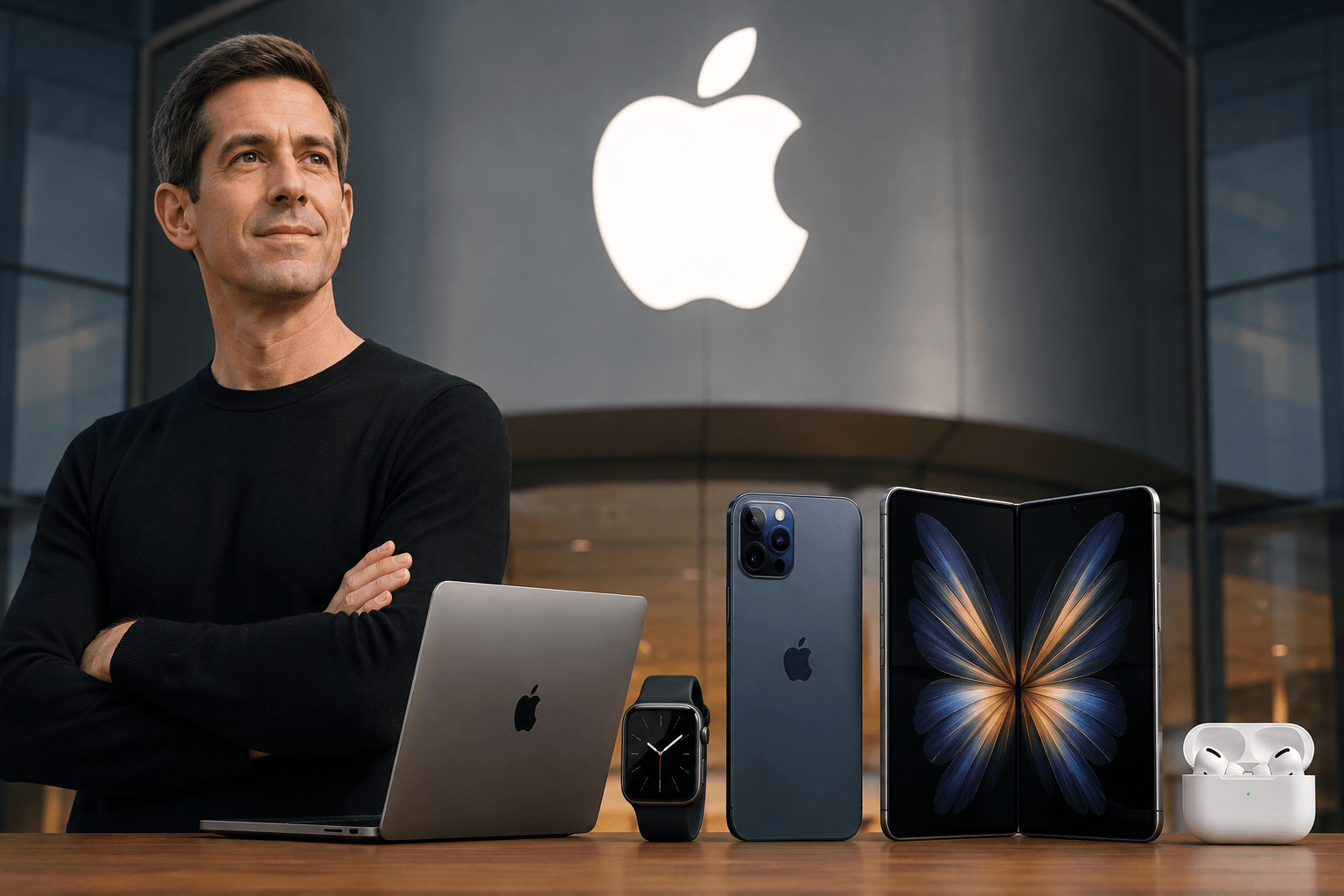
Apple enters its next chapter under CEO John Ternus, who took over from Tim Cook on September 1, 2026, and led his first product keynote just eight days later. The transition has coincided with the biggest pricing shift in Appleu2019s recent history: a new iPhone leasing program, confirmed price increases across the lineup, and the debut of the companyu2019s first foldable iPhone, the Duo, which starts at $1,999.
Quick Answer
- Leadership change: John Ternus became Appleu2019s second-ever CEO on September 1, 2026; Tim Cook remains as Executive Chairman.
- Pricing: Apple raised Mac and iPad prices in June 2026 and confirmed higher iPhone prices at the September 9 keynote.
- New leasing option: Apple Upgrade, run with Klarna, lets customers lease an iPhone from $17.99 a month instead of buying outright.
- Why now: A global memory chip shortage, nicknamed “RAMageddon,” has driven up the cost of components across the industry.
What Changed at the Top of Apple
Tim Cook led Apple for 15 years before handing the CEO role to John Ternus on September 1, 2026. Ternus, 51, spent 25 years at Apple and most recently served as Senior Vice President of Hardware Engineering, where he oversaw the Apple Watch, AirPods, and Apple Vision Pro. Cook stays involved as Executive Chairman and keeps a board seat. Apple shares rose more than 2 percent on the day the transition was formalized, and the stock has gained roughly 17 percent so far in 2026.
Why Is This Trending in Business News?
Ternusu2019s first major test as CEO arrived immediately: the September 9 “Surprise and Shine” keynote, where Apple unveiled the iPhone 18, iPhone 18 Pro, iPhone 18 Pro Max, and the companyu2019s first foldable iPhone, the Duo. The event mattered as much for pricing strategy as for hardware, since it landed weeks after Apple had already raised prices on Macs and iPads and rolled out a new way to pay for devices over time.
Apple Upgrade: The New Leasing Program
In late July 2026, Apple retired its 11-year-old iPhone Upgrade Program and replaced it with Apple Upgrade, a leasing plan run in partnership with the buy-now-pay-later company Klarna. It covers iPhone, Apple Watch, Mac, and iPad, with iPhone leases starting at $17.99 a month and running 12 or 24 months. There is no security deposit, and enrollment uses a soft credit check. At the end of a lease term, customers can sign a new lease, buy the device outright, or return it. Billing is handled through the Klarna app rather than Appleu2019s own systems, and missing three payments in a row ends the lease and makes the remaining balance due immediately.
Why Apple Raised Prices
Appleu2019s pricing shift is tied to a global shortage of memory chips, known in the industry as “RAMageddon.” Surging demand for AI data-center hardware has pushed DRAM and NAND flash prices up sharply through 2026, and manufacturers across the electronics industry, not just Apple, have had to raise prices or offer financing to soften the impact on buyers. Apple raised Mac and iPad prices by roughly $100 in June 2026, citing the memory shortage directly, and had already signaled that iPhone price increases were coming before the September keynote.
What This Means for Buyers
For everyday customers, the practical impact is twofold. First, list prices on new Apple hardware are higher than in previous years, particularly on higher-storage configurations. Second, Apple is actively steering buyers toward leasing rather than outright purchase, a shift that softens the sticker shock of expensive devices like the $1,999 iPhone Duo while keeping customers on a regular upgrade cycle. Industry analysts note that people are keeping iPhones for close to four years now, and a leasing model encourages more frequent upgrades, which benefits Appleu2019s device sales even as component costs stay elevated.
How This Compares to Past Apple Leadership Changes
Apple has only had two CEOs since Steve Jobs stepped down in 2011, which makes Ternusu2019s promotion a genuinely rare event in the companyu2019s history. Tim Cook was Appleu2019s chief operating officer for years before taking over, and he was widely seen as a supply-chain and operations specialist rather than a product visionary. Ternus, by contrast, spent his career on the hardware engineering side, directly overseeing the design of products like the Apple Watch, AirPods, and Apple Vision Pro. Analysts have suggested this background makes him well suited to steer Apple through a period defined by hardware innovation, including the companyu2019s first folding device, at the same time as it manages rising component costs.
The Bigger Industry Picture
Apple is not alone in raising prices this year. PC makers including Dell, HP, and Lenovo have all signaled similar increases tied to the same memory shortage, and smartphone makers such as Xiaomi have publicly warned that DRAM costs will push up phone prices industry-wide. Research firms including TrendForce and Goldman Sachs have described the current DRAM shortage as among the most severe in over a decade, driven largely by AI companies buying up memory chip capacity for data centers. That backdrop matters for how Appleu2019s pricing decisions are read: the company is responding to an industry-wide cost problem rather than simply testing how much customers will pay.
What to Watch on Appleu2019s Balance Sheet
Investment bank analysts, including those at Morgan Stanley, have modeled scenarios where iPhone unit shipments stay roughly flat year over year but Appleu2019s average selling price rises by more than 10 percent, driven by a combination of straightforward price increases and more customers opting for the pricier foldable Duo. Under that scenario, iPhone revenue could grow substantially even without selling more phones, which helps explain why Apple has been willing to accept some near-term criticism over pricing in exchange for protecting its profit margins during the chip shortage.
What Happens Next?
Watch for Appleu2019s next earnings call for concrete numbers on how iPhone 18 and iPhone Duo pricing has affected sales volume versus average selling price. Analysts have suggested that even flat unit shipments could translate into double-digit revenue growth if Appleu2019s average selling price rises as expected. It is also worth watching whether competitors follow Appleu2019s lead on leasing as the memory shortage continues into 2027.
Frequently Asked Questions
Who is Appleu2019s CEO now?
John Ternus became Appleu2019s CEO on September 1, 2026, succeeding Tim Cook, who moved into the role of Executive Chairman.
Why did Apple raise its prices in 2026?
Apple has pointed to a global memory chip shortage, sometimes called “RAMageddon,” which has significantly increased the cost of DRAM and NAND components used in its devices.
What is Apple Upgrade?
Apple Upgrade is a leasing program run with Klarna that lets customers pay monthly for an iPhone, Apple Watch, Mac, or iPad instead of buying it outright, starting at $17.99 a month for an iPhone.
Does leasing include AppleCare+?
No, Apple Upgrade does not include AppleCare+ by default, unlike the previous iPhone Upgrade Program.
How much did Mac and iPad prices increase?
Apple raised Mac and iPad prices by roughly $100 in June 2026 as part of its response to rising memory chip costs.