
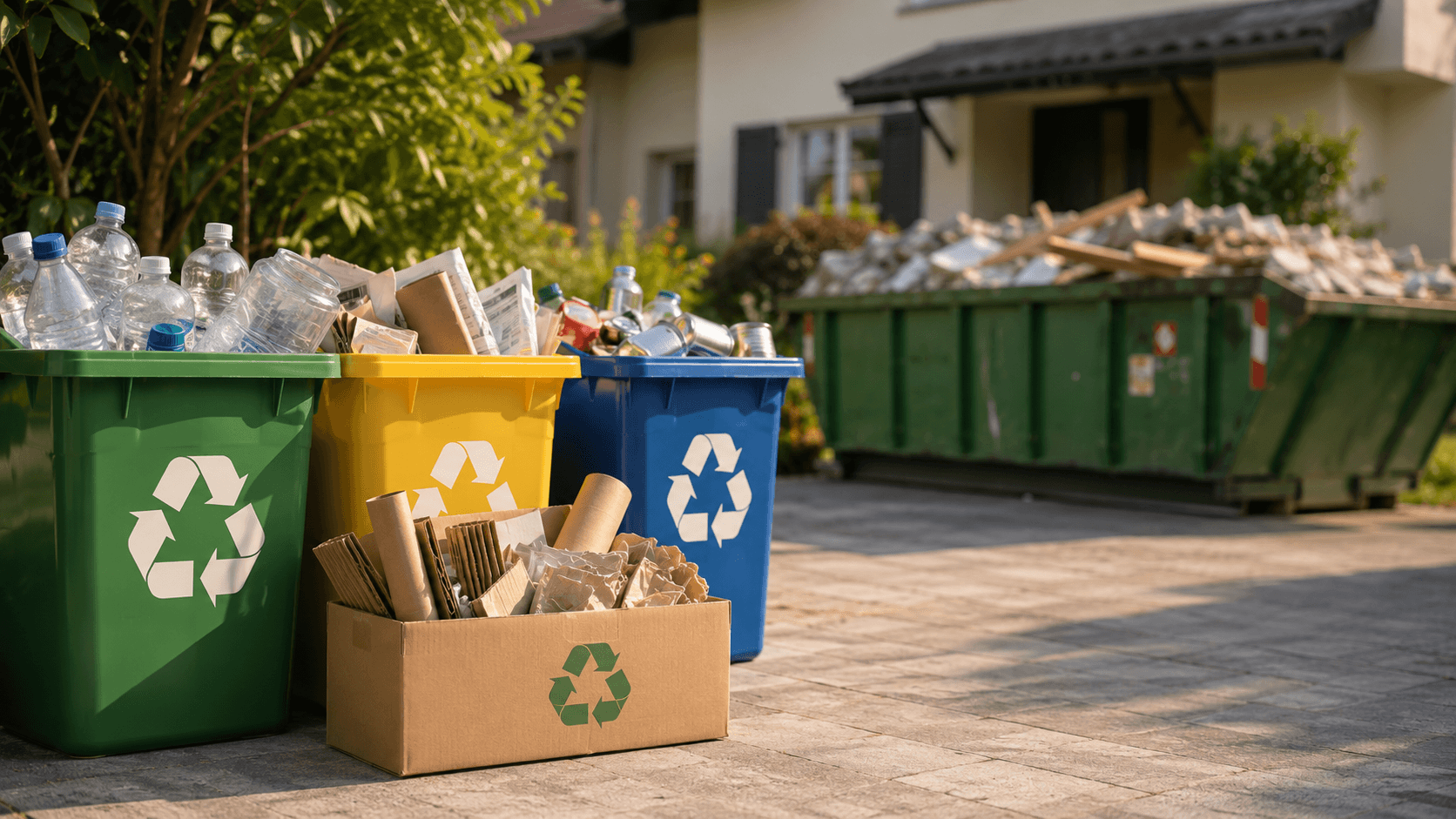
To reduce household waste, follow the waste hierarchy: refuse and reduce what you bring home first, then reuse and repair, then recycle, and compost food scraps. Start by tracking what fills your bin for one week, then focus on the biggest category, which for most homes is food, packaging, and paper.
Key takeaways
- Food waste is usually the easiest place to start and the quickest way to save money.
- Reducing and reusing beat recycling, because they stop waste being created at all.
- Rinse and sort recycling by your local rules, since contamination can spoil whole loads.
- Small habits repeated weekly matter more than a one-off clear-out.
In this guide
- What Is the Waste Hierarchy?
- Start With a One-Week Waste Audit
- Kitchen and Food Waste: 8 Ways to Cut Back
- Plastic and Packaging: 6 Ways to Cut Back
- Paper and Mail: 3 Ways to Cut Back
- Bathroom and Cleaning: 3 Ways to Cut Back
- Household Items and Electronics: 5 Ways to Cut Back
- How to Recycle Correctly
- What Can You Compost?
- A Simple 7-Day Plan to Get Started
- Common Mistakes to Avoid
- Frequently Asked Questions
Last updated: October 2026
Most households throw away far more than they realise, and much of it is avoidable. The good news is that you do not need a zero-waste lifestyle to make a real difference. A handful of habits, repeated every week, can shrink your bin, save money, and keep useful materials out of landfill.
What Is the Waste Hierarchy?
Environmental agencies rank waste actions from best to worst. The US Environmental Protection Agency and UK government guidance on recycling and waste use the same logic:
- Reduce and refuse: do not bring waste home in the first place.
- Reuse and repair: keep items in use for longer.
- Recycle: turn materials into new products.
- Recover or compost: capture energy or nutrients.
- Dispose: landfill is the last resort.
Recycling matters, but it sits in the middle. Preventing waste always beats processing it. For more on why recycling matters, see our article on why it is important to recycle household waste.
Start With a One-Week Waste Audit
Before changing anything, find out what you actually throw away. For seven days, glance at your bins each evening and jot down the main categories: food, plastic packaging, paper, and other. Most people discover that one or two categories dominate. Aim your first efforts there.
Kitchen and Food Waste: 8 Ways to Cut Back
- Plan meals and shop with a list. Impulse buying is the biggest cause of uneaten food.
- Store food properly. Keep older items at the front of the fridge and cupboard so they are used first.
- Understand date labels. In the UK and EU, “use by” relates to safety, while “best before” relates to quality. Food past “best before” is often still fine to eat.
- Freeze before it spoils. Bread, cooked rice, sauces, and leftovers all freeze well.
- Cook with scraps. Vegetable peelings and bones make good stock. Stale bread becomes breadcrumbs or croutons.
- Buy loose produce. You can pick exactly the amount you need.
- Compost what you cannot eat. See the composting guide below.
- Cook sensible portions. Measure rice and pasta until you know your household’s usual amounts.
The campaign Love Food Hate Waste has free recipes and storage tips for using up leftovers.
Plastic and Packaging: 6 Ways to Cut Back
- Carry reusable bags and keep a spare in your car or coat.
- Use a refillable water bottle instead of buying bottled water.
- Use refill and bulk stores for dry goods and cleaning products where available.
- Swap cling film for reusable containers, beeswax wraps, or plates over bowls.
- Choose products with less packaging, such as bar soap or concentrated refills.
- Replace single-use items, like disposable razors, cutlery, and coffee cups, with durable versions.
Paper and Mail: 3 Ways to Cut Back
- Switch to paperless billing for banks and utilities.
- Opt out of junk mail through your country’s mail preference service.
- Reuse paper and cardboard for notes, packing, and kids’ crafts before recycling.
Bathroom and Cleaning: 3 Ways to Cut Back
- Use bar soap and shampoo bars to avoid plastic bottles.
- Replace paper towels with washable cloths for most spills.
- Buy refills or concentrates and top up existing bottles.
Household Items and Electronics: 5 Ways to Cut Back
- Repair before replacing. Many clothes, shoes, and small appliances can be fixed cheaply.
- Buy second-hand furniture, books, and clothes when you can.
- Donate or sell items you no longer need.
- Recycle electronics properly. Use take-back schemes or council collection points, not general waste.
- Use rechargeable batteries and recycle old ones at designated drop-off points.
How to Recycle Correctly
- Check local rules. What is accepted differs by area and changes over time.
- Empty and quickly rinse containers. Food residue can contaminate paper and cardboard.
- Do not “wish-cycle”. Putting in doubtful items can spoil a whole load.
- Keep plastic bags, batteries, and electronics out of kerbside bins unless your council says otherwise.
- Flatten boxes to save space.
What Can You Compost?
| Usually fine | Avoid in a basic home bin |
|---|---|
| Fruit and vegetable scraps | Cooked food, meat, and fish |
| Coffee grounds and tea bags (check they are plastic-free) | Dairy and oily food |
| Eggshells | Pet waste |
| Shredded cardboard and paper | Diseased plants |
| Garden leaves and grass clippings | Glossy or coated paper |
If you have no garden, check whether your council offers a food-waste collection or use a countertop compost system.
A Simple 7-Day Plan to Get Started
| Day | Action |
|---|---|
| Day 1 | Start your waste audit |
| Day 2 | Check fridge dates and plan this week’s meals |
| Day 3 | Pack reusable bags, bottle, and container |
| Day 4 | Switch two bills to paperless |
| Day 5 | Check your local recycling rules |
| Day 6 | Set up a food scrap bin or caddy |
| Day 7 | Review your audit and pick your next target |
Common Mistakes to Avoid
- Buying “eco” products you do not need. The greenest item is the one you already own.
- Trying to change everything at once. Pick two or three habits and build from there.
- Ignoring food waste. It often costs more than any other category.
- Recycling dirty or mixed materials. Contamination reduces what can be recovered.
Ready for the next step? Read our guide to eco-friendly waste solutions for a greener future and our overview of personal finance to see how cutting waste can also cut costs.
Frequently Asked Questions
Start with food. Plan meals, use a shopping list, store food properly, and freeze leftovers. These steps cut waste and save money within the first week.
For many homes it is food waste, followed by packaging and paper. A one-week bin audit will show your own biggest source.
No. Recycling helps, but reducing and reusing come first in the waste hierarchy because they prevent waste from being created.
Fruit and vegetable scraps, coffee grounds, eggshells, shredded cardboard, and garden leaves are generally safe. Avoid meat, fish, dairy, and cooked food in a basic home bin.
Usually yes. Wasting less food, buying fewer disposable items, and repairing rather than replacing all reduce spending.
Check your local council or waste authority website. Accepted items vary by area and can change.
This guide is general advice. Recycling rules differ by location, so always follow your local authority’s instructions.



