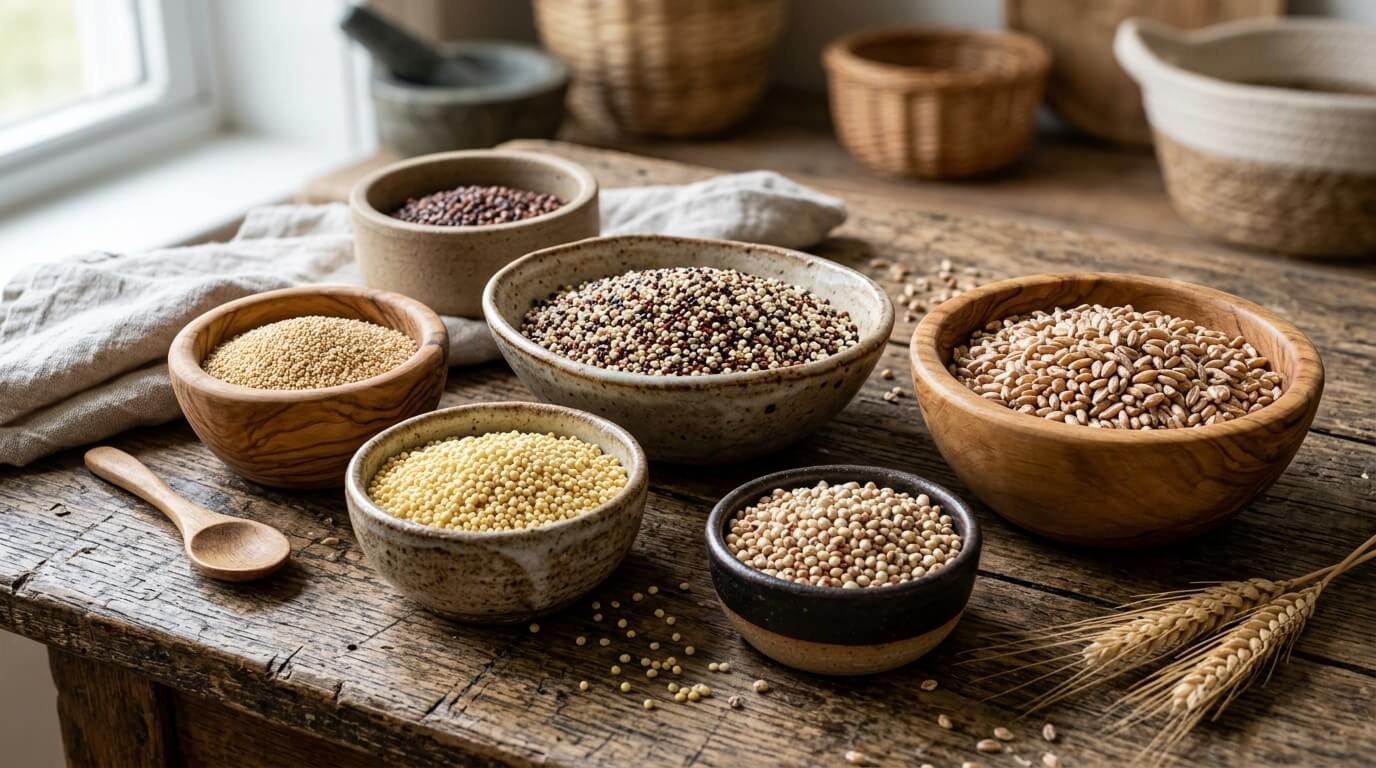
Ancient grains such as quinoa, millet, farro, and amaranth have moved from health-food shelves into everyday kitchens. They are popular for their nutty flavour, chewy texture, and generally higher fibre content compared with refined grains. But what are they exactly, and are they really better for you?
This guide explains what counts as an ancient grain, compares the most popular types, outlines the evidence-based benefits, and shows how to cook them without fuss.
What Are Ancient Grains?
The term usually describes grains and seeds that have been grown for thousands of years and have changed little through modern breeding, unlike heavily bred wheat and corn. Several “grains” on the list, such as quinoa, amaranth, and buckwheat, are technically seeds, known as pseudocereals, but they are cooked and eaten like grains.
Popular Ancient Grains Compared
| Grain | Gluten-free? | Taste and texture | Good for |
|---|---|---|---|
| Quinoa | Yes | Mild, slightly nutty, fluffy | Salads, bowls, side dishes |
| Millet | Yes | Mild, slightly sweet | Porridge, pilafs, flatbreads |
| Amaranth | Yes | Earthy, sticky when cooked | Porridge, thickening soups |
| Teff | Yes | Sweet, molasses-like, tiny grains | Injera, porridge, baking |
| Buckwheat | Yes | Strong, earthy | Pancakes, noodles, kasha |
| Sorghum | Yes | Chewy, neutral | Salads, popping, flour |
| Farro | No | Chewy, nutty | Soups, risotto-style dishes |
| Spelt | No | Nutty, slightly sweet | Bread, pasta, baking |
| Barley | No | Chewy, mild | Soups, stews, grain bowls |
Gluten-free grains can still be contaminated during processing, so people with coeliac disease should look for products labelled gluten-free.
Health Benefits of Ancient Grains
- More fibre when eaten whole: whole grains keep the bran and germ, which supply fibre, B vitamins, and minerals that refining removes. Fibre supports digestion and helps you feel full.
- Useful protein: quinoa and amaranth contain all nine essential amino acids, which is unusual for a plant food.
- Minerals: many ancient grains provide magnesium, iron, zinc, and phosphorus. Teff, for example, is valued for its iron and calcium content.
- Heart and blood sugar support: large studies link higher whole-grain intake with better heart health and a lower risk of type 2 diabetes. These benefits apply to whole grains in general, not only the ancient ones. The Harvard T.H. Chan School of Public Health summarises the research.
Are Ancient Grains Healthier Than Regular Whole Grains?
Not necessarily. Ordinary whole wheat, brown rice, and oats are also excellent. Ancient grains are best seen as a way to add variety, flavour, and different nutrients to your diet rather than a miracle food. Choosing whole, minimally processed versions matters more than the grain’s age. The Whole Grains Council offers practical guidance on identifying whole-grain products.
How to Cook Ancient Grains
These are approximate ratios and times. Package directions always take priority.
- Quinoa: 1 cup grain to 2 cups water, simmer about 15 minutes. Rinse first to remove bitter coating.
- Millet: 1 cup to 2 cups water, simmer about 20 minutes. Toast it first for extra flavour.
- Buckwheat groats: 1 cup to 2 cups water, simmer 10 to 15 minutes.
- Farro (pearled): 1 cup to 3 cups water, simmer 20 to 30 minutes, then drain.
- Amaranth: 1 cup to 2.5 cups water, simmer about 20 minutes. It stays slightly sticky.
- Teff: 1 cup to 3 cups water, simmer 15 to 20 minutes for porridge.
Easy Ways to Eat More Ancient Grains
- Breakfast: cook millet or amaranth like porridge with fruit and nuts.
- Salads: toss cooled quinoa or farro with vegetables, herbs, and a lemon dressing.
- Soups: add barley or farro instead of pasta.
- Baking: swap part of the flour for spelt or teff flour.
- Side dishes: use them in place of white rice.
- Batch cooking: make a big pot and refrigerate it for quick weekday bowls.
Buying and Storing Tips
- Buy from stores with good turnover, because whole grains contain natural oils that can go rancid.
- Store in airtight containers in a cool, dark place, or in the freezer for long storage.
- Check the label for “whole grain” if you want the full nutritional benefit.
Who Should Be Careful?
People with coeliac disease or gluten sensitivity must avoid farro, spelt, and barley. Anyone with kidney problems or a special medical diet should ask a doctor or dietitian before making large changes. For general healthy-eating advice, see the NHS Eat Well guidance.
Frequently Asked Questions
What are the healthiest ancient grains?
Quinoa, amaranth, teff, buckwheat, and millet are popular for their protein, fibre, and minerals. The best choice is whichever whole grain you will actually eat regularly.
Is quinoa a grain?
Botanically it is a seed, but it is cooked and eaten like a grain, so it is usually grouped with them.
Are ancient grains gluten-free?
Some are, such as quinoa, millet, amaranth, teff, and buckwheat. Farro, spelt, and barley contain gluten.
Are ancient grains good for weight management?
Their fibre can help you feel full, but portion size still matters. They work best as part of a balanced diet.
Can I replace rice with ancient grains?
Yes. Most can be cooked in a similar way and used in the same dishes, though cooking times differ.
Do ancient grains cost more?
Often yes, but buying in bulk and choosing common options like millet and barley can keep costs down.
This article is for general information and does not replace advice from a doctor or registered dietitian.