Interleague play means regular-season games between American League and National League teams. It began in 1997, and since 2023 every team plays every opponent from the other league at least once a season, with 46 interleague games per team, including a four-game set against a natural rival and one three-game series against each of the other 14 clubs.
Key takeaways
- Interleague play started on 12 June 1997 with the Giants at the Rangers.
- Since 2023, each team plays 46 interleague games: four against a natural rival and 42 in 14 three-game series.
- The universal designated hitter has applied in both leagues since 2022.
- Head-to-head records are available from Baseball Reference, MLB.com, and Retrosheet.
In this guide
- What Is Interleague Play?
- A Short History of Interleague Play
- How the Modern Schedule Works
- Where Do Teams Like the Nationals and Royals Fit?
- Famous Interleague Rivalries
- Does Interleague Play Affect the Standings?
- How to Look Up a Head-to-Head Record
- Tips for Watching Interleague Games
- Frequently Asked Questions
Last updated: October 2026
Before 1997, American League and National League teams met only in spring training, the All-Star Game, and the World Series. Interleague play changed that by putting teams from the two leagues on the same regular-season schedule. This guide explains how interleague play began, how the schedule works today, the best-known rivalries, and how to look up the record between any two teams, including pairs such as the Washington Nationals and Kansas City Royals, who play in different leagues.
What Is Interleague Play?
Interleague play means regular-season games between a team from the American League (AL) and a team from the National League (NL). The results count in the standings, but they are played between teams that do not usually compete for the same division title. A common way to describe a team’s interleague record is the combined win-loss record against the other league.
A Short History of Interleague Play
| Year | Development |
|---|---|
| Before 1997 | AL and NL teams met only in spring training, the All-Star Game, and the World Series |
| 1997 | Interleague play begins. The first regular-season game was the San Francisco Giants at the Texas Rangers on 12 June 1997 |
| 1997 to 2012 | Interleague games were limited to a few windows during the season, and teams played only a selection of opponents from the other league |
| 2013 | The Houston Astros moved to the AL, creating two leagues of 15 teams, so interleague games had to be played throughout the season |
| 2022 | The designated hitter became universal, so the NL and AL now play with the same rule |
| 2023 | A balanced schedule began: every team plays every other team, at least once each season |
You can read more in the Baseball Reference interleague play article.
How the Modern Schedule Works
Since 2023, a team plays 162 games divided like this:
| Type of opponent | Games |
|---|---|
| Division rivals (13 games against each of four teams) | 52 |
| Other teams in the same league (six or seven games against each) | 64 |
| Interleague: a four-game home-and-home set against one “natural rival” | 4 |
| Interleague: one three-game series against each of the other 14 teams in the opposite league | 42 |
| Total | 162 |
That makes 46 interleague games for each team, up from 20 before 2023. A team hosts each opponent from the other league at least once every two seasons, because the series alternate between home and road.
Where Do Teams Like the Nationals and Royals Fit?
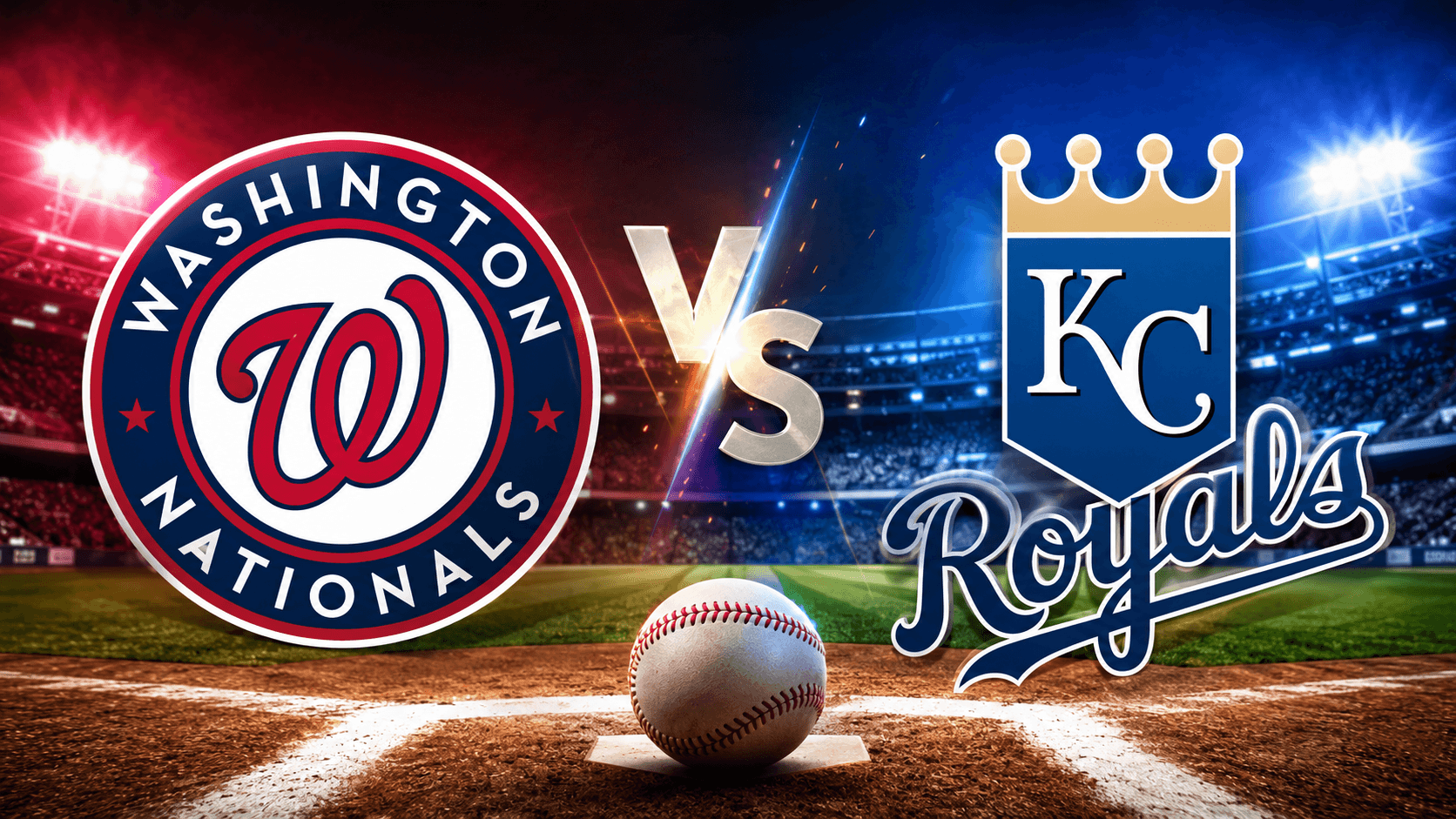
The Washington Nationals play in the NL East, and the Kansas City Royals play in the AL Central. Because they are in different leagues, they meet only through interleague play. Under the current format, each team has a designated natural rival, which for the Nationals is the Baltimore Orioles and for the Royals is the St. Louis Cardinals. Against teams that are not natural rivals, the Nationals and Royals normally play one three-game series each season, with the venue switching every year. To see the full history between two clubs, use the head-to-head tools described below.
Famous Interleague Rivalries
| Rivalry | Teams |
|---|---|
| Subway Series | New York Yankees and New York Mets |
| Crosstown Classic | Chicago Cubs and Chicago White Sox |
| Freeway Series | Los Angeles Dodgers and Los Angeles Angels |
| Beltway Series | Baltimore Orioles and Washington Nationals |
| Show-Me Series | St. Louis Cardinals and Kansas City Royals |
| Citrus Series | Miami Marlins and Tampa Bay Rays |
Some rivalry names and pairings can change over time because of team moves and scheduling decisions, so check official sources for the current list.
Does Interleague Play Affect the Standings?
- Interleague games count in the standings like any other game.
- Because teams face different sets of opponents, strength of schedule can vary slightly, which is why some fans argue about fairness.
- The 2023 balanced schedule reduced the number of games against division rivals, and some fans feel it weakened traditional divisional rivalries.
- Interleague series give fans a chance to see stars from the other league in their home park.
How to Look Up a Head-to-Head Record
- Go to Baseball Reference and open the page for one team.
- Look for the head-to-head or interleague record tools, which list results against other clubs.
- Check game logs for individual series, with scores, starting pitchers, and attendance.
- Use MLB.com standings for the current season’s interleague records.
- For older seasons, Retrosheet offers free game-by-game data.
To understand the numbers once you find them, read our guides to baseball player stats and how to read a baseball box score, and our companion piece on how to compare two baseball teams.
Tips for Watching Interleague Games
- Look at the starting pitchers first, because a team may face an opposing ace it rarely sees.
- Remember that with the universal designated hitter, pitchers no longer bat in either league’s ballparks.
- Check park effects. Some stadiums are pitcher-friendly and others favour hitters.
- Enjoy the novelty. Many players face an opposing team only a few times a year.
Frequently Asked Questions
In 1997. The first regular-season interleague game was the San Francisco Giants at the Texas Rangers on 12 June 1997.
Forty-six: a home-and-home set of four games against a natural rival and one three-game series against each of the other 14 teams in the opposite league.
Yes. They count the same as any other regular-season game.
No. The designated hitter has been universal in both leagues since 2022.
It is the opposing league team assigned to each club for a regular home-and-home series, often chosen because of geography or history.
Use team pages and head-to-head tools on Baseball Reference, the MLB.com standings, or Retrosheet for older games.
This article is general information on MLB scheduling. Formats and rivalry names can change, so check MLB.com for the latest details.
Related Guides
- Inter Miami vs Tigres UANL Timeline: Key Moments & Highlights – Key moments and highlights from the dramatic Inter Miami vs Tigres UANL Leagues Cup quarterfinal.
- How to Get Into Esports: Beginner Guide to Competitive Gaming (2026) – How to get into esports: choose a game, practise smartly, join tournaments and teams, explore esports caree…
- What Is NIL in College Sports? Name, Image, and Likeness Explained – What is NIL in college sports? Learn what name, image, and likeness means, deal types, the 2025 settlement,…
- Rugby Sevens Training Plan: Fitness, Skills, and Recovery (2026) – Rugby sevens training explained: speed, repeat-sprint fitness, strength, skills, a sample weekly plan, nutr…