

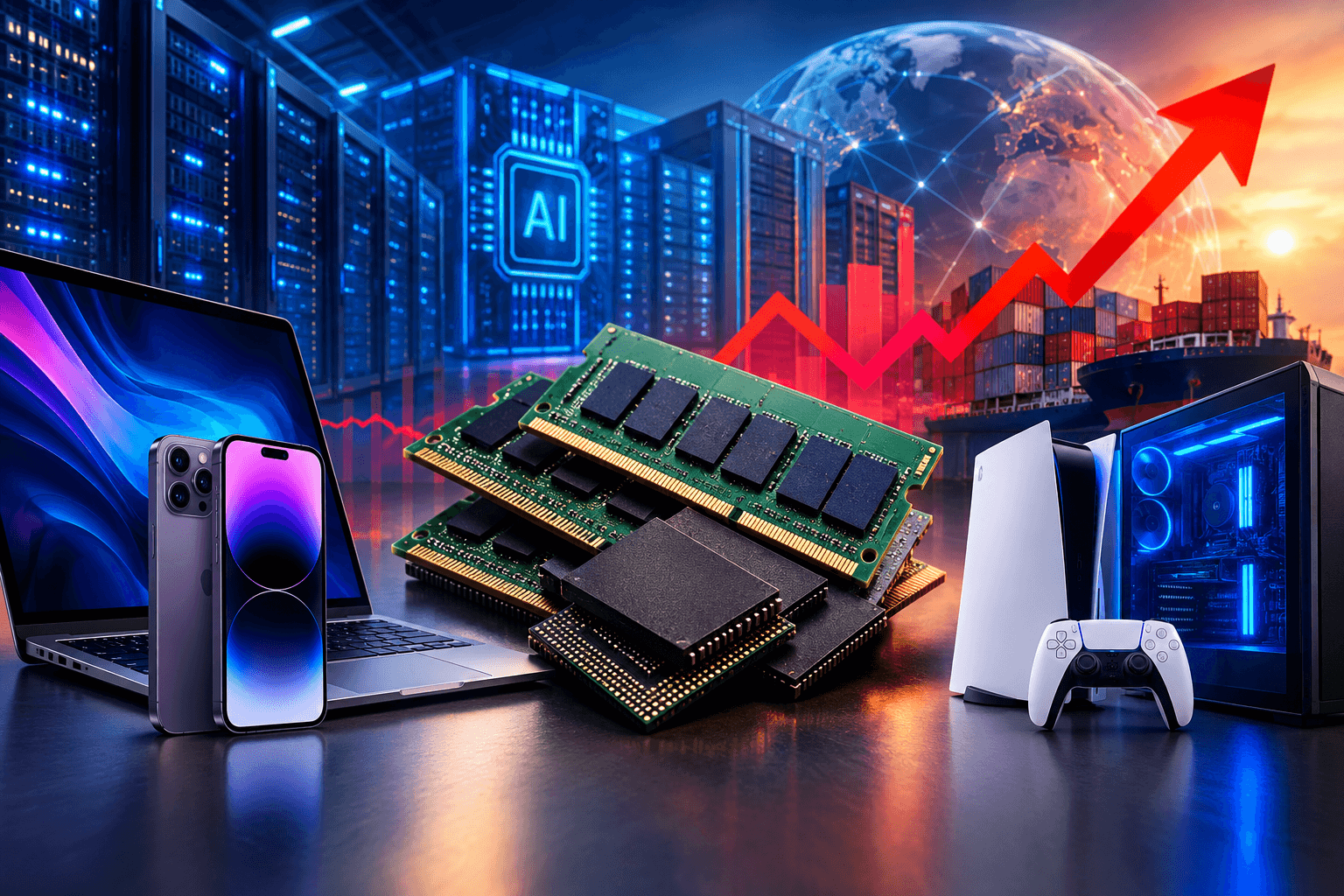
RAMageddon is the industry nickname for the global memory chip shortage that has pushed DRAM and NAND flash prices up by 90 percent or more in 2026, driving higher prices across phones, laptops, game consoles, and PCs. The shortage is being driven primarily by AI companies buying up memory capacity for data centers, leaving less supply for consumer electronics makers like Apple, Dell, HP, Lenovo, and Samsung.
Quick Answer
- What it is: A severe global shortage of DRAM and NAND flash memory chips.
- Scale: TrendForce reported DRAM contract prices rose 90-95 percent quarter over quarter in Q1 2026, with some server DRAM categories up around 90 percent in a single quarter.
- Cause: Surging AI data-center demand for memory, combined with underinvestment in production capacity during the previous down cycle.
- Who it affects: Buyers of phones, laptops, game consoles, hard drives, and any device that relies on RAM or flash storage.
- How long it lasts: Analysts including IDC expect elevated prices to persist into 2027, with some forecasts extending into 2028.
What Is RAMageddon?
RAMageddon is the term the tech industry has adopted for the current memory chip crisis. Memory chips, mainly DRAM (used for short-term working memory) and NAND flash (used for long-term storage), have quietly become one of the most expensive components inside modern electronics. As AI companies race to build data centers, they have absorbed a huge share of global memory production, particularly high-bandwidth memory used in AI accelerators. That has left a shrinking supply of ordinary consumer-grade memory, and prices have responded accordingly.
How Bad Is the Shortage, in Numbers?
- TrendForce has reported DRAM contract prices climbing 90-95 percent quarter over quarter in early 2026, with PC DRAM seeing increases as high as 105-110 percent in the same period.
- Samsung raised prices on 32GB DDR5 modules from $149 to $239, a 60 percent jump.
- DDR5 contract pricing has more than doubled, moving from around $7 per unit in early 2025 to nearly $19.50.
- Goldman Sachs has projected a DRAM undersupply of roughly 4.9 percent in 2026, which it describes as the most severe shortfall in more than 15 years.
- HP has said memory now accounts for roughly a third of the build cost of a PC, up from around 15-18 percent previously.
Why Is This Happening Now?
The shortage traces back to a combination of factors. AI companies, including major cloud providers and sovereign AI programs, have been buying every wafer of advanced memory they can secure, often reserving supply years in advance. Manufacturers like SK Hynix, Samsung, and Micron have confirmed that their high-bandwidth memory, DRAM, and NAND capacity is essentially sold out through 2026 and into 2027. At the same time, memory makers underinvested in new production capacity during the previous industry downturn, leaving the market unable to quickly scale up supply when AI demand surged.
How This Is Showing Up in Consumer Prices
The effects are cascading through the electronics industry. Apple raised Mac and iPad prices by roughly $100 in June 2026 and confirmed higher iPhone pricing at its September 2026 keynote. PC makers including Dell, HP, and Lenovo have signaled similar increases, with Dell’s COO calling the memory cost surge “unprecedented.” Smartphone maker Xiaomi has publicly warned that rising DRAM costs could push its own device prices up by roughly 25 percent per phone. Sony reportedly delayed the PlayStation 6 due to chip availability issues, and some PC builders have started selling systems without RAM installed, leaving customers to source memory separately.
What This Means for Buyers
If you are planning to buy a new phone, laptop, or games console, expect either higher prices, smaller default storage or memory configurations, or both, through at least 2027. Budget and midrange devices are likely to be hit hardest, since manufacturers have less room to absorb rising memory costs without passing them on. If you are not in urgent need of an upgrade, there is little indication that prices will ease significantly in the near term, so waiting is unlikely to result in cheaper hardware this year.
How Memory Chips Fit Into a Deviceu2019s Total Cost
Memory is easy to overlook because it rarely gets marketing attention the way a processor or camera does, but it plays an outsized role in a deviceu2019s bill of materials. In a typical smartphone, memory has historically made up around 15-20 percent of the component cost. In a PC, that figure has recently jumped from roughly 15-18 percent to as much as 35 percent, according to HP. That means even a modest doubling in memory chip prices can meaningfully change what it costs a manufacturer to build a device, long before any other component changes at all. This is part of why manufacturers have been unusually direct about blaming memory prices specifically, rather than absorbing the cost quietly the way they might with smaller input-cost changes.
Which Devices Are Affected Most
Not every product category feels RAMageddon equally. High-end phones and laptops with large amounts of RAM and storage are exposed to bigger absolute cost increases, but their higher price points give manufacturers more room to absorb some of the hit. Budget and midrange devices are more vulnerable, because there is less margin to work with, which means shoppers in that segment are more likely to see manufacturers respond by trimming default storage or RAM configurations, rather than raising the sticker price outright. Server hardware and data-center equipment are arguably the most exposed of all, since that is precisely the segment competing directly with AI companies for the same limited memory supply.
What Happens Next?
Analysts expect memory prices to remain elevated through 2026 and into 2027, with some forecasts, including from TeamGroup’s general manager, suggesting the crunch could extend into 2028 before new production capacity comes fully online. Watch for further price increases from major electronics makers around their holiday-season product launches, and for any policy or investment announcements from memory manufacturers aimed at expanding capacity.
Frequently Asked Questions
What does RAMageddon mean?
RAMageddon is an informal industry term for the severe global shortage of DRAM and NAND flash memory chips affecting prices across consumer electronics in 2026.
Why are memory chip prices rising so fast?
AI companies are buying up a large share of global memory chip production for data centers, which has sharply reduced the supply available for phones, laptops, and other consumer devices.
Will laptop and phone prices go back down?
Most analysts expect elevated prices to continue into 2027, and some forecasts suggest the shortage could persist into 2028 before new memory production capacity is built.
Which companies have raised prices because of RAMageddon?
Apple, Dell, HP, and Lenovo have all confirmed or signaled price increases tied to rising memory costs, and Xiaomi has warned of similar increases on its smartphones.
Does RAMageddon affect gaming consoles too?
Yes. Reports indicate Sony delayed the PlayStation 6 due to chip supply issues connected to the broader memory shortage.