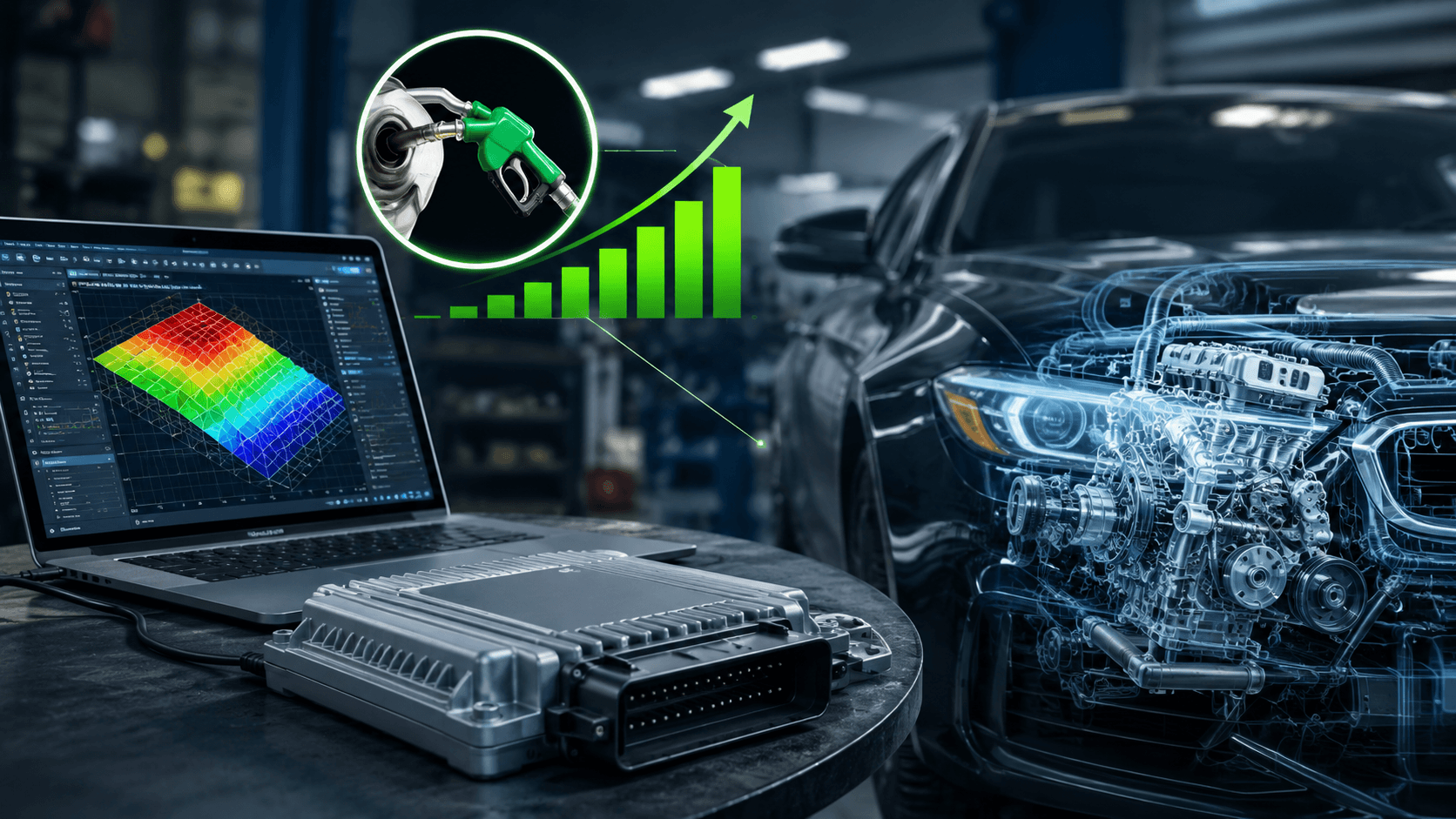
ECU remapping can sometimes improve fuel economy, especially on turbocharged engines with an efficiency-focused tune and gentle driving, but it is not guaranteed. Performance remaps often increase consumption if you use the extra power. Risks include warranty and insurance problems, extra wear, and emissions legality.
Key takeaways
- A remap changes engine settings such as fuelling, boost, and ignition timing.
- Economy gains depend on the tune, the engine, and your driving style, and claims are hard to verify.
- Warranty, insurance, wear, and emissions rules are real risks.
- Tyre pressure, servicing, and smoother driving are cheaper ways to save fuel.
In this guide
- What Is ECU Remapping?
- How Can a Remap Affect Fuel Economy?
- Performance Tune vs Economy Tune
- Factors That Decide Your Result
- Risks and Downsides
- How to Choose a Reputable Tuner
- Cheaper Ways to Improve Fuel Economy
- Is ECU Remapping Worth It?
- Frequently Asked Questions
Last updated: October 2026
ECU remapping is often advertised as a way to gain more power and better fuel economy at the same time. The truth is more nuanced. A remap changes how your engine behaves, and whether it saves fuel depends on the tune, the vehicle, and how you drive. This guide explains what remapping does, when it can help economy, and the risks and legal points to know before you pay for one.
What Is ECU Remapping?
The engine control unit (ECU) is the computer that manages the engine. It reads sensors and controls fuelling, ignition timing, turbo boost, and other settings using stored “maps”. Remapping rewrites some of these settings to change the engine’s behaviour, usually to increase power and torque, improve throttle response, or, in some cases, improve efficiency.
How Can a Remap Affect Fuel Economy?
- More torque at low revs: some turbocharged cars feel stronger from lower engine speeds, so you can use higher gears and lighter throttle in steady driving.
- Optimised fuelling and timing: factory settings are often conservative for all fuels, climates, and driving styles, so there may be room to adjust them.
- Economy-focused tunes: some tuners offer a map aimed at efficiency rather than peak power.
However, results are mixed. Many people notice the extra power and use it, which can raise consumption. Claims of large savings are hard to verify, and independent evidence is limited, so treat any specific percentage with caution.
Performance Tune vs Economy Tune
| Type of tune | Main goal | Typical effect on fuel use |
|---|---|---|
| Performance (Stage 1) | More power and torque | Can improve or worsen economy, depending on how you drive |
| Economy tune | Efficiency in normal driving | May reduce consumption slightly in steady driving |
| Hardware plus remap (Stage 2 and above) | Maximum performance | Usually higher consumption when used hard |
Factors That Decide Your Result
- Engine type: turbocharged diesels and petrols often respond more than naturally aspirated engines.
- Quality of the tune: a custom, tested map is very different from a generic file.
- Driving style: gentle, steady driving gives the best chance of savings.
- Vehicle condition: worn parts, wrong tyre pressures, and poor servicing can cancel out gains.
Risks and Downsides
- Warranty: a manufacturer may refuse claims if they find engine software has been modified.
- Insurance: you must tell your insurer about modifications. Failing to do so can invalidate cover.
- Wear and reliability: extra torque can stress the clutch, dual-mass flywheel, turbo, and transmission.
- Emissions and legality: a remap that breaks emissions rules can cause an MOT failure or breach the law. Removing or disabling items like particulate filters, EGR, or AdBlue systems is illegal for road use in many countries. See the GOV.UK MOT guidance and, in the US, the EPA rules against tampering with emission controls.
- Resale: some buyers avoid modified vehicles.
How to Choose a Reputable Tuner
- Look for a tuner who tests the car on a dynamometer and writes or checks the map for your exact engine.
- Ask whether they keep your original file and can restore it.
- Request a written explanation of what they change and any effect on emissions.
- Check reviews and ask about guarantees or insurance-backed cover.
- Avoid anyone who promises huge gains in both power and economy with no downsides.
Cheaper Ways to Improve Fuel Economy
You can often save fuel without touching the ECU:
- Keep tyres inflated to the recommended pressure.
- Service the car regularly and use the correct oil.
- Remove roof racks and unnecessary weight.
- Drive smoothly, anticipate traffic, and avoid harsh acceleration and braking.
- Combine short trips and avoid long idling.
The US Department of Energy’s fueleconomy.gov has free tips and comparison tools. If you are weighing running costs more broadly, our guide to financial planning and personal finance can help you build a budget.
Is ECU Remapping Worth It?
Remapping is best seen as a performance upgrade that may sometimes bring an economy benefit, not a guaranteed fuel-saving device. If your main goal is to save money on fuel, better driving habits and good maintenance are safer and cheaper. If you want more performance, choose a reputable tuner, inform your insurer, and stay within emissions rules.
Frequently Asked Questions
Sometimes, especially with an efficiency-focused tune on a turbocharged engine and steady driving. Performance tunes can raise consumption if you use the extra power.
The remap itself is generally legal, but changes that break emissions rules, such as disabling a particulate filter or EGR, are illegal for road use in many countries.
It can. Manufacturers may refuse claims if they find modified engine software. Check your warranty terms first.
Yes. Modifications should be declared, and failing to do so may invalidate your insurance.
Poorly done or aggressive tunes can increase wear on the engine, clutch, turbo, and transmission. A careful, tested tune from a reputable tuner reduces the risk.
Correct tyre pressure, regular servicing, less weight, and smoother driving are inexpensive and effective.
This article is general information and not mechanical, legal, or insurance advice. Rules vary by country and vehicle.