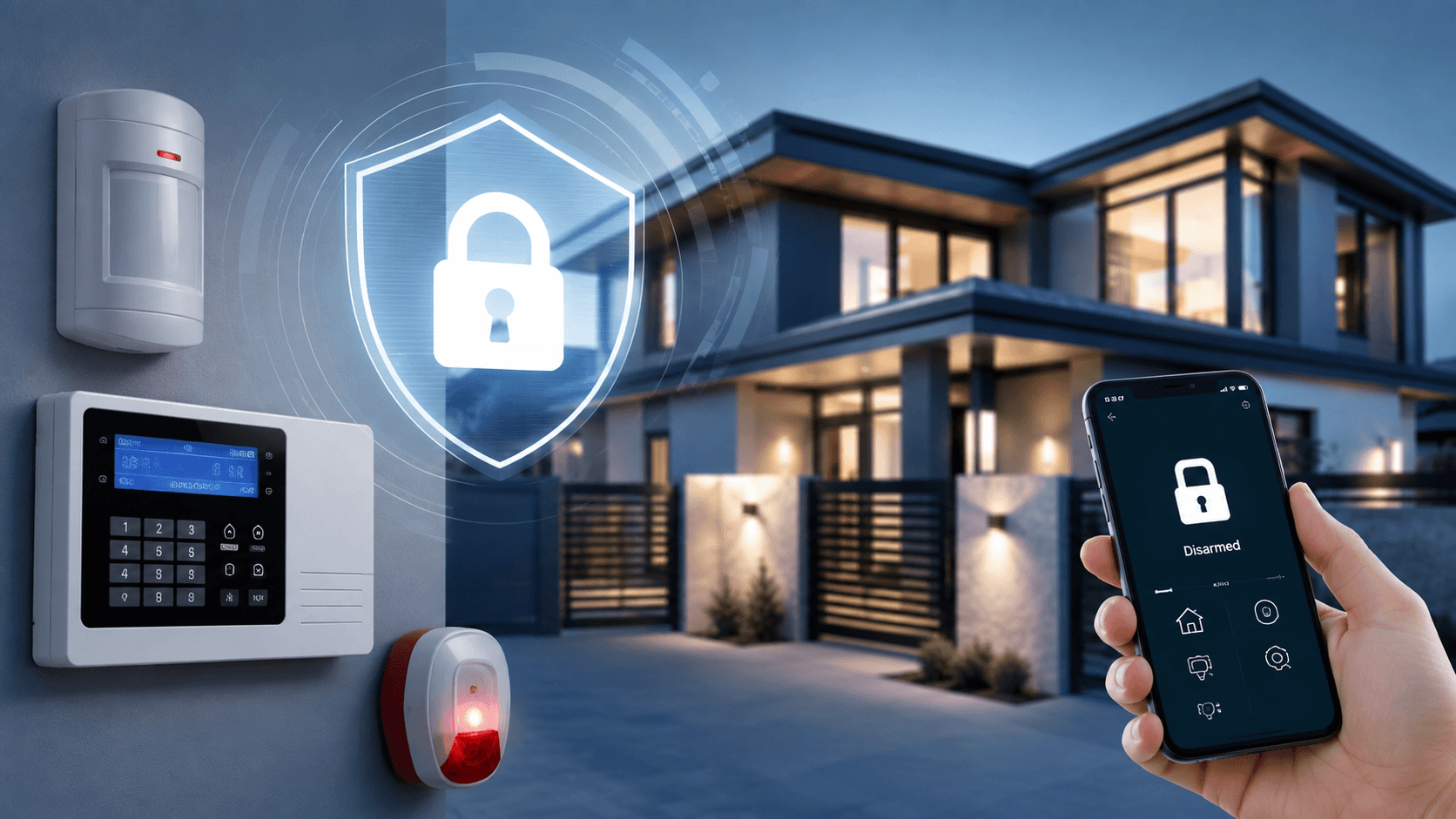
The main types of intruder alarms for businesses are wired, wireless, and hybrid systems, which can be bells-only or monitored by an alarm receiving centre. For most commercial premises, a certified, monitored system with dual-path signalling and suitable detectors is the best choice, and it often satisfies insurers and police response requirements.
Key takeaways
- Wired is reliable, wireless is flexible, and hybrid combines both.
- Bells-only alarms deter but do not call anyone; monitored alarms trigger a response.
- In the UK, certified installers and recognised standards affect police response and insurance.
- Reduce false alarms with dual-technology detectors, verification, training, and servicing.
In this guide
- The Main Types of Intruder Alarm Systems
- Alarm Systems Compared
- Types of Detectors Used in Commercial Alarms
- Police Response and Why Certification Matters
- Verified Alarms and False Alarm Reduction
- How to Choose a Business Intruder Alarm
- What Affects the Cost?
- Maintenance Tips
- Frequently Asked Questions
Last updated: October 2026
Choosing a commercial intruder alarm is about more than picking a box on the wall. The type of system, the detectors, how alerts are sent, and who responds all affect how well your premises are protected and whether your insurer is satisfied. This guide explains the main types of intruder alarms for businesses, how they differ, and how to choose. The standards and response rules below are based on the UK, so check local requirements if you are elsewhere.
The Main Types of Intruder Alarm Systems
1. Wired Alarms
Detectors and keypads are connected to the control panel by cable. They are reliable, unaffected by radio interference, and suit new builds or major refurbishments where cabling is easy. Installation is more disruptive in existing buildings.
2. Wireless Alarms
Devices communicate with the panel by radio and run on batteries. They are quicker and cheaper to install, work well in older or listed buildings, and are easy to expand. Batteries need checking, and signal range must be tested on site.
3. Hybrid Alarms
Hybrid systems combine wired and wireless devices, which is useful when some areas are easy to cable and others are not.
4. Bells-Only Alarms
A bells-only alarm sounds a siren and flashes a strobe but does not send a signal to anyone. It may deter a thief, but unless someone nearby hears it and acts, there is no guaranteed response. It is usually unsuitable for higher-risk commercial premises.
5. Monitored Alarms
A monitored alarm sends a signal to an alarm receiving centre (ARC) when triggered. Operators then follow a set procedure, which usually means contacting keyholders and, where eligible, the police. For most businesses this is the best choice.
6. Smart and IP-Connected Alarms
Modern systems connect through broadband, mobile networks, or both. You can arm and disarm from an app, receive alerts, and review event history. Dual-path signalling, for example broadband plus mobile, reduces the risk of a cut line leaving you unprotected.
Alarm Systems Compared
| Type | Pros | Cons | Best for |
|---|---|---|---|
| Wired | Reliable, no batteries in detectors | More disruptive to install | New builds, refits |
| Wireless | Fast install, flexible | Battery upkeep, range checks | Existing and listed buildings |
| Hybrid | Flexible mix | More planning needed | Larger or mixed premises |
| Bells-only | Low cost, deterrent | No remote response | Very low-risk sites |
| Monitored | Active response, insurer-friendly | Monitoring fee | Most businesses |
Types of Detectors Used in Commercial Alarms
- Passive infrared (PIR) sensors: detect movement through body heat. They are the most common detectors.
- Dual-technology detectors: combine PIR with microwave or another method to reduce false alarms.
- Door and window contacts: trigger when an entry point is opened.
- Glass-break detectors: listen for the sound or vibration of breaking glass.
- Vibration or shock sensors: detect attempts to force walls, shutters, or safes.
- Beam or perimeter detectors: protect yards, car parks, and outdoor storage.
- Panic and hold-up buttons: let staff raise the alarm silently.
Police Response and Why Certification Matters
In the UK, police response to an intruder alarm generally depends on the system being installed and maintained to recognised standards, and on having a unique reference number (URN). Installers certified by an inspectorate such as NSI or SSAIB can arrange this, and they work to the European standard series BS EN 50131 and its UK supporting guidance. Police policy can change, so always confirm current rules with your installer or local force.
Many insurers also require a certified, monitored system as a condition of cover. Check your policy before choosing.
Verified Alarms and False Alarm Reduction
False alarms waste time and can lead to the withdrawal of police response. Ways to reduce them include dual-technology detectors, confirmation logic that needs two triggers before raising the alarm, audio or video verification at the monitoring centre, proper staff training, and regular servicing.
How to Choose a Business Intruder Alarm
- Assess your risk. Consider your location, stock value, past incidents, and opening hours.
- Check insurer requirements. Ask what grade, certification, and monitoring they expect.
- Choose wired, wireless, or hybrid based on your building and budget.
- Select the right detectors for each area, including perimeter and high-value rooms.
- Pick monitoring and signalling with a backup path.
- Use a certified installer and ask for references and a written quote.
- Plan maintenance. Most businesses arrange at least an annual service visit.
What Affects the Cost?
- Size of the premises and number of detectors
- Wired, wireless, or hybrid installation
- Monitoring and signalling type
- Extra features such as CCTV integration, app control, and access control
- Ongoing service and monitoring fees
Prices vary widely, so request several itemised quotes and compare the whole package, not just the headline price.
Maintenance Tips
- Test the system regularly and have it professionally serviced each year.
- Replace batteries on wireless devices as advised.
- Update codes when staff leave.
- Keep detectors clear of obstructions such as stock or cobwebs.
- Keep keyholder contact details up to date.
Frequently Asked Questions
Wired, wireless, and hybrid systems, which can be bells-only or monitored through an alarm receiving centre.
For most businesses, a certified, monitored system with reliable signalling and the right detectors, since it enables a response and may meet insurance requirements.
Modern wireless systems can be very reliable when properly installed and maintained, although they need battery checks and signal testing.
In the UK, response usually depends on a compliant, certified, monitored system with a URN, and policies can change. Ask your installer and local force.
Most businesses arrange at least one professional service visit a year, plus regular user tests.
Some insurers offer better terms or require specific systems. Check your policy and ask your insurer what they accept.
This article is general information, and standards and police policies vary by country and may change. Check current requirements with your installer and insurer.